.svg)
.svg)
Autonomous QA for lean teams shipping at scale

.png)
June 2024. A high-growth Series B startup is shipping thrice daily, but their QA process still takes two weeks. This is the velocity mismatch that kills modern startups. I've been talking to CTOs who are trapped in a cycle of hiring more manual testers just to keep up with their developers. It's a linear solution to an exponential problem. Autonomous QA for lean teams isn't about replacing specialists. It is a force multiplier.
Development teams using AI copilots now ship 2-3x more features per sprint. QA capacity hasn't kept up. I saw this firsthand at Islands last week. They manage development across multiple client projects. When clients adopted AI tools, feature delivery jumped, but testing cycles stayed locked at two weeks. The backlog exploded.
The linear scaling trap for autonomous QA for lean teams
Traditional QA hiring scales linearly with engineering headcount. This creates a cost-prohibitive bottleneck for teams trying to ship at a 208x frequency. If you double your dev team, you usually end up doubling your human overhead. This creates a sustainability gap that lean teams cannot afford.
I analyzed the numbers. Most teams aiming for high utilization rates realize that hiring is a 3-6 month lag. By the time a QA engineer is productive, the roadmap has already moved. You are left with a hiring sequence that protects heads rather than protecting code quality.
What intent-based testing actually automates
Most AI software testing agents in the market are just script generators. They write Selenium or Cypress code that breaks the moment your DOM changes. This is implementation-based testing. It is brittle. It fails during refactors because the tests are coupled to CSS selectors.
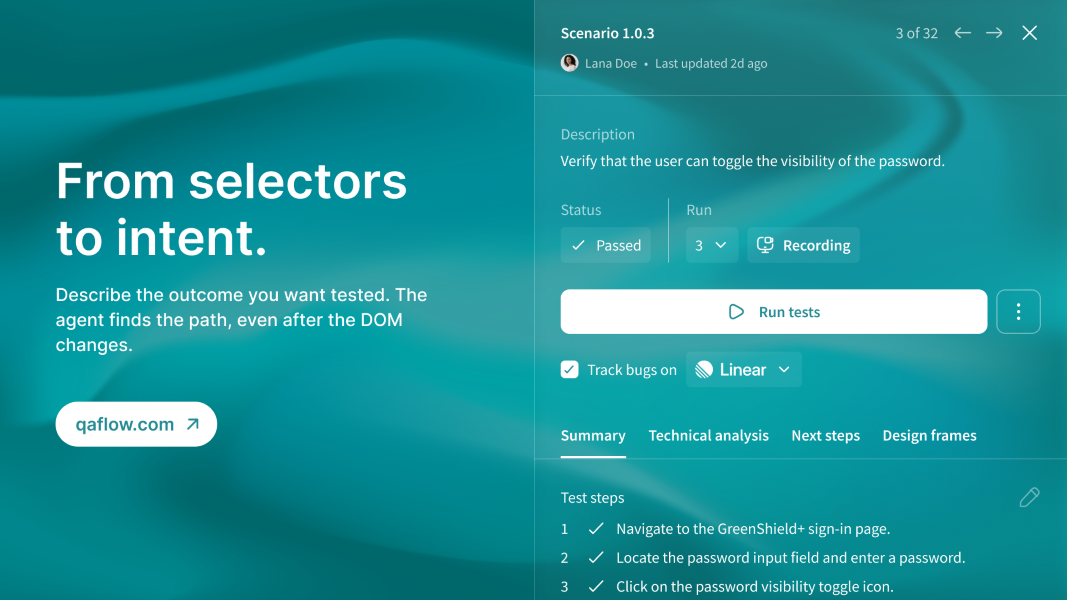
Significant QA flow benefits come from intent-based testing. These agents validate the intent of the Figma to test generation process rather than the underlying code implementation.
Design and code analysis
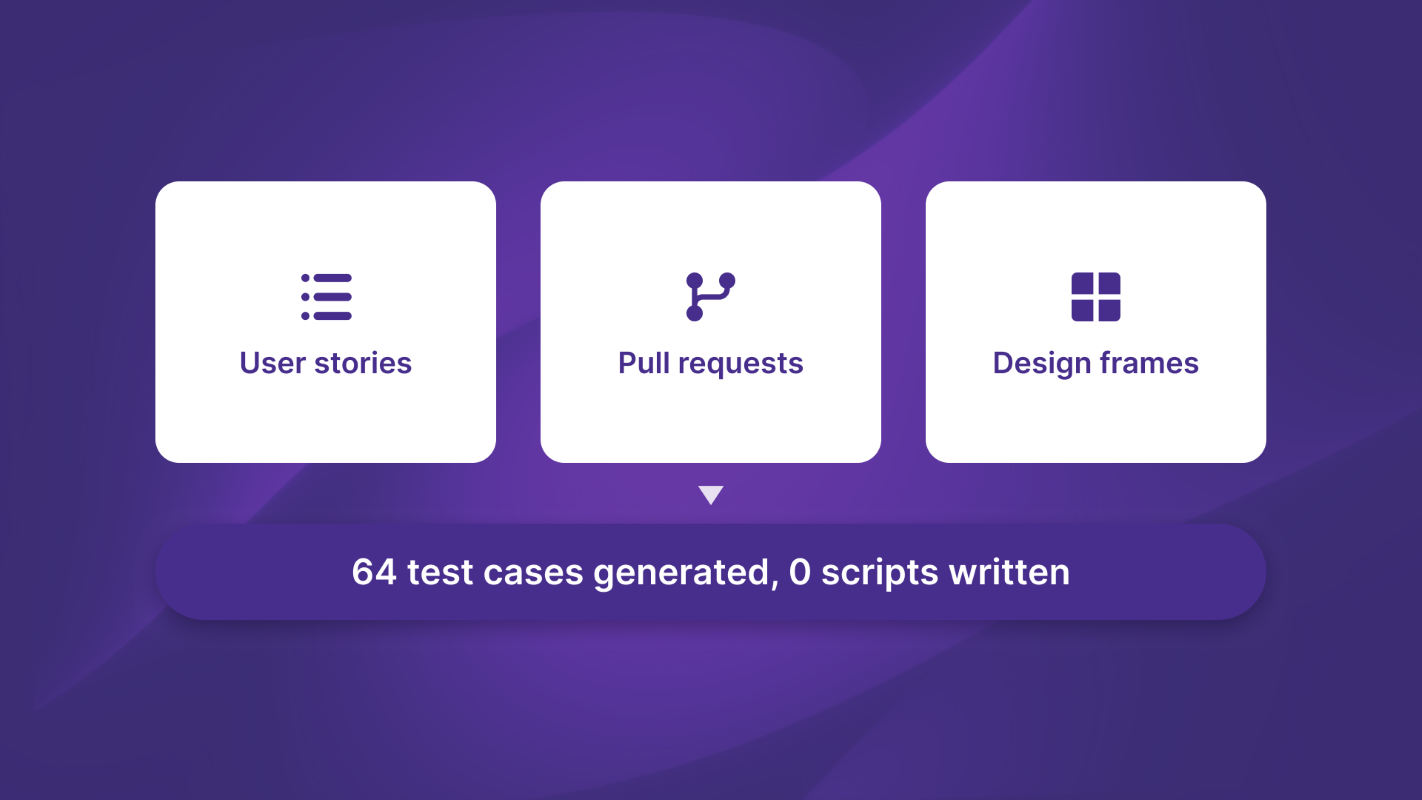
- Read design intent: Analyze Figma files to see what a button should do.
- Analyze code changes: Detect modified API endpoints from GitHub commits.
- Generate tests automatically: Create regression suites without human scenario planning.
Stability over time
Tests that pass on Friday but fail on Monday because of a class name change are a thing of the past. If you change a class name, the test stays green. The intent: completing a checkout: remains the same.
The shift to system oversight
We are seeing a shift where engineering leaders use agents to manage complete lifecycles with minimal manual intervention. This moves the burden from maintenance to oversight. You can use these AI tools for operations, but QA is where the most significant velocity gains live.
Teams must also consider how they appear in the new generative engine landscape. If your tech stack is slow because of legacy QA, your GEO performance suffers. Speed is a technical requirement for AI visibility.
Why lean teams choose autonomy
- Eliminates the 3-6 month hiring lag for QA specialists
- Reduces the technical debt created by AI-accelerated coding
- Provides 24-7 test coverage without human shift work
- Ships intent-based tests directly from design files
.png)
The takeaway
Autonomous testing with QA flow provides the bridge between design and code. It eliminates the bottleneck in modern engineering cycles. Strategic founders are shifting from script maintenance to system oversight. This ensures they ship flawless sites at the speed of thought. Don't let your QA capacity determine your roadmap. Implement an autonomous system and get back to shipping. The economic reality is simple: either you automate the generation of tests, or you cap your growth.
Stop letting manual bottlenecks slow your release cycles and start testing for free today.