.svg)
.svg)
Why incomplete bug reports are killing your agency margins

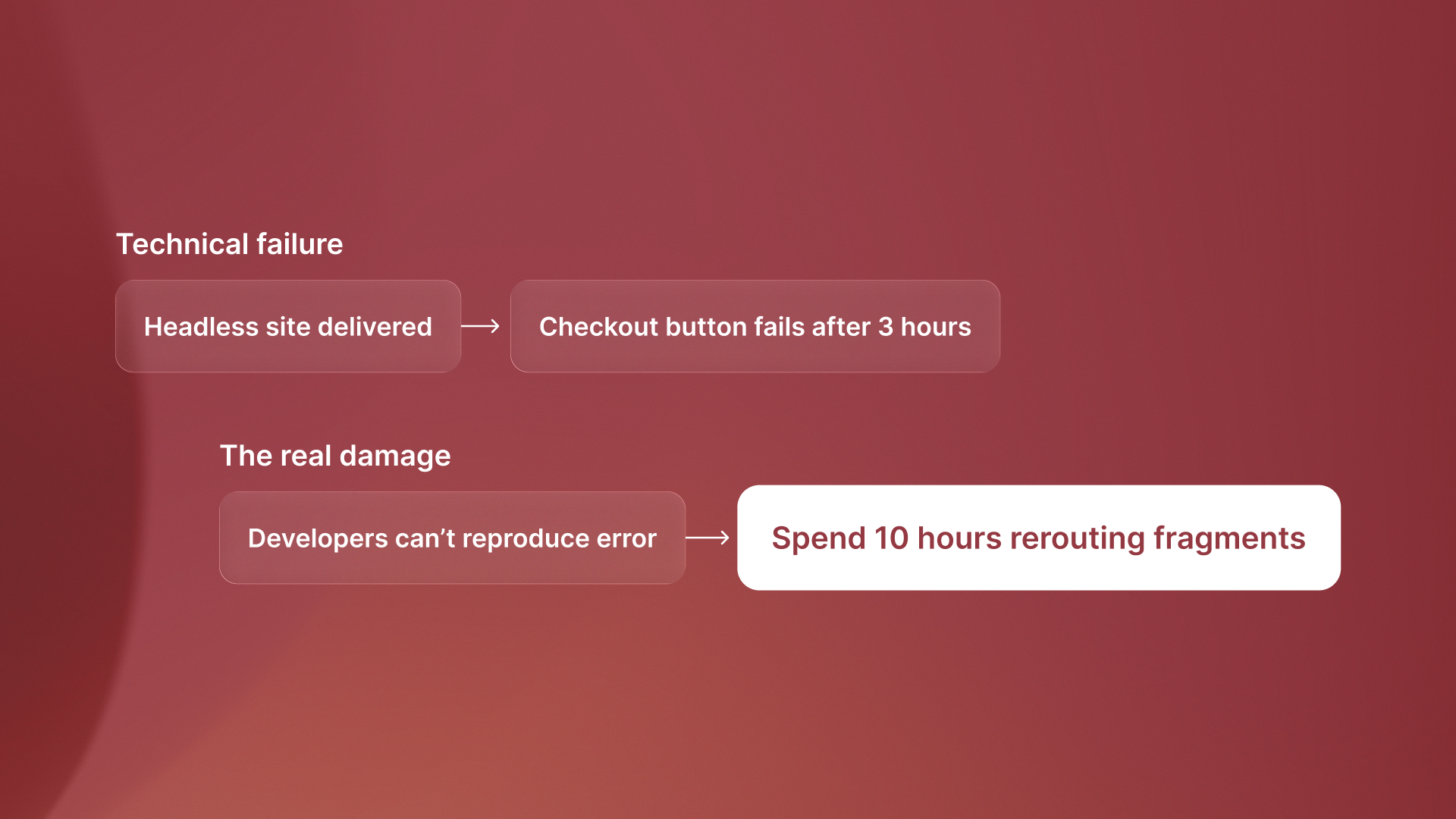
December 2024. A premier marketing agency delivers a $200k headless commerce site to a global client. Only three hours after launch, the checkout button fails on mobile. The technical failure was frustrating. However, the real damage happened in the following 48 hours. The client sent vague screenshots. The developers couldn't reproduce the error. The project manager spent ten hours acting as a human router for fragmented data.
I have observed this exact pattern at Islands repeatedly. Technical leaders often mistake this for a cultural issue or a need for better project management. In reality, it is a structural failure in the marketing agency QA workflow. High-velocity development has outpaced manual testing capacity. This creates a bug-leakage gap that costs agencies both their margins and their reputations.
The reporting gap in agency handoffs
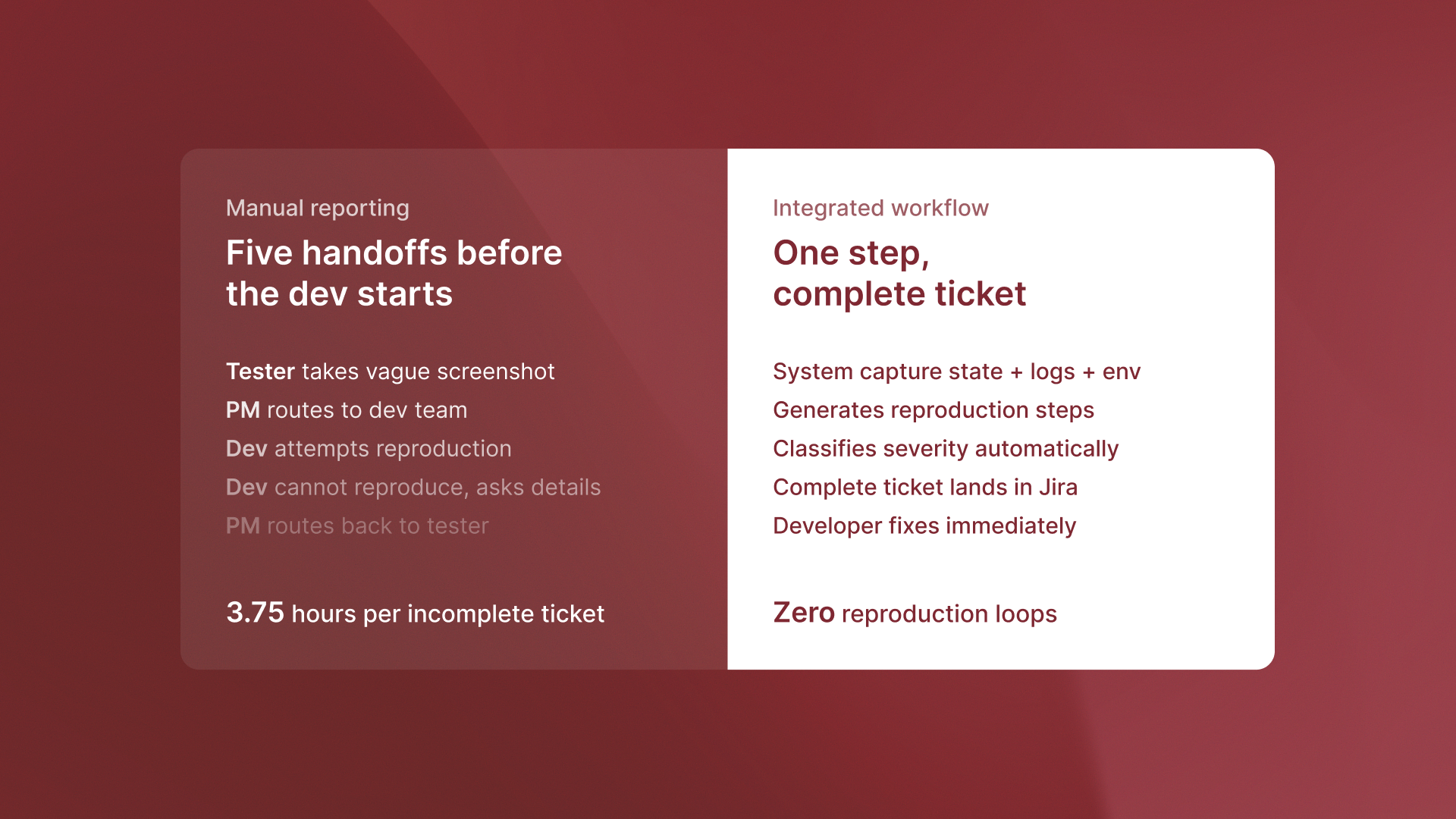
Incomplete and inaccurate bug reports are the primary reason agency handoffs fail. When a tester finds an issue, they might not share the local state. They might not share console logs. They might not share environment details. The developer then has to keep trying to reproduce the issue. This results in significant delays. According to Careerist, poor bug reporting is a top mistake. It causes critical issues to slip through the cracks during QA cycles. Implementing bug reporting best practices is no longer optional for studios managing complex builds.
The friction of the communication tax
This gap creates a heavy communication tax between departments. Instead of shipping features, senior engineers spend hours deciphering fragments of information. Poor reporting practices create constant friction and communication gaps between testers and development teams (Syntactics).
Analyzation of velocity loss
At QA flow, I analyzed how this back-and-forth drains velocity. When you rely on manual QA bottlenecks, you pay for more than the tester. You pay for the 30% of developer time lost to clarifying what the tester actually meant. This inefficiency mirrors why fractional marketing engagements fail when there is a gap between strategy and execution.
From manual bottlenecks to autonomous velocity
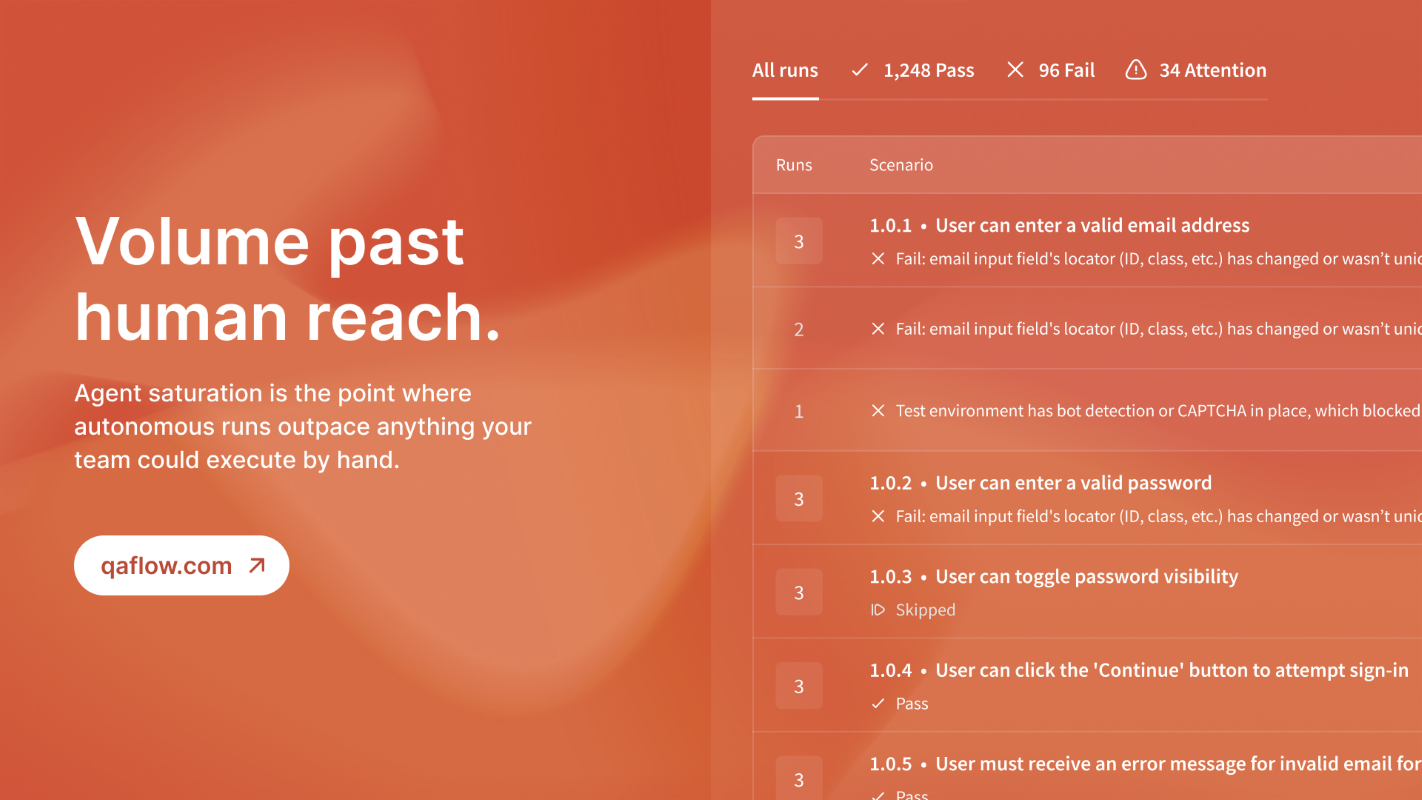
Autonomous testing transforms QA from an obstacle into a competitive advantage for agencies. The goal is to remove human intervention from the autonomous bug lifecycle entirely. This shift matters for studios. AI coding tools have increased code volume. Testing speed has not kept up. Failing to address this leads to technical hire failures as teams try to hire their way out of a workflow problem.
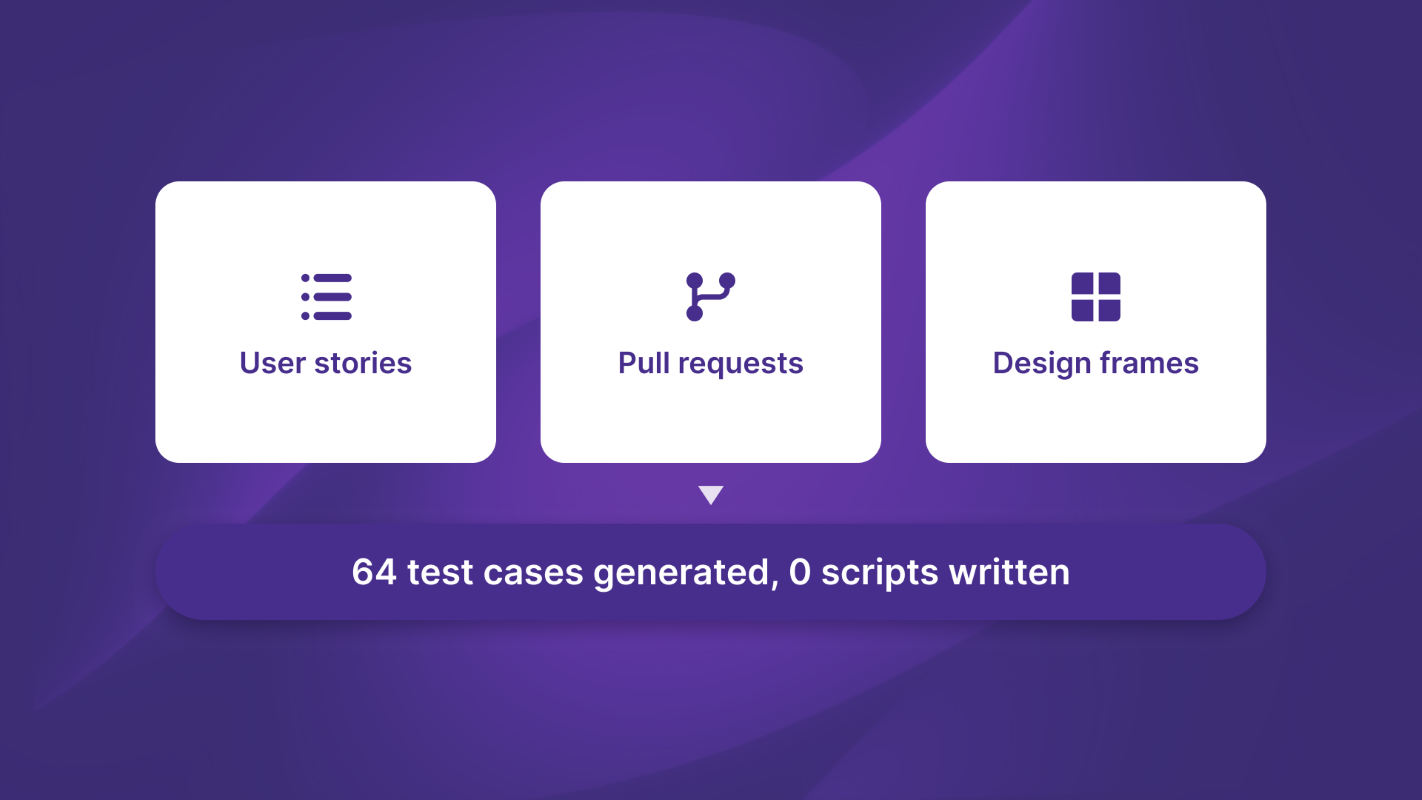
QA flow reduces QA cycles from 2 weeks to 3 days. It generates intent-based testing directly from Figma to Jira QA pipelines. The system reads the design intent rather than just the code implementation. This generates full bug reports with technical context automatically.
The economic realities for the modern agency:
- Manual reporting is a linear solution to an exponential code problem.
- Incomplete tickets drive developer context-switching and revenue leakage.
- Intent-based systems eliminate the need for human reproduction steps.
- Faster cycles protect the high margins of fixed-fee client projects.
- Visibility into these costs prevents underestimating freelance overhead by 30-50%.
Why this matters regarding agency scalability
In a world of AI-accelerated development, manual QA is a liability. Agencies that treat testing as an afterthought will see their utilization rates suffer. Meanwhile, their rework costs will climb. High-authority thought leadership demonstrates that the most successful ventures prioritize operational infrastructure over raw output.
Adopting an autonomous marketing agency QA workflow is the only way to protect client relationships and maintain agency margins. Stop hiring more human routers. Build an autonomous quality infrastructure instead.
Ready to reclaim your margins and eliminate the communication tax once and for all? Sign up for QA flow and start automating your agency testing today.

.png)