.svg)
.svg)
The founder's qa decision framework for scaling

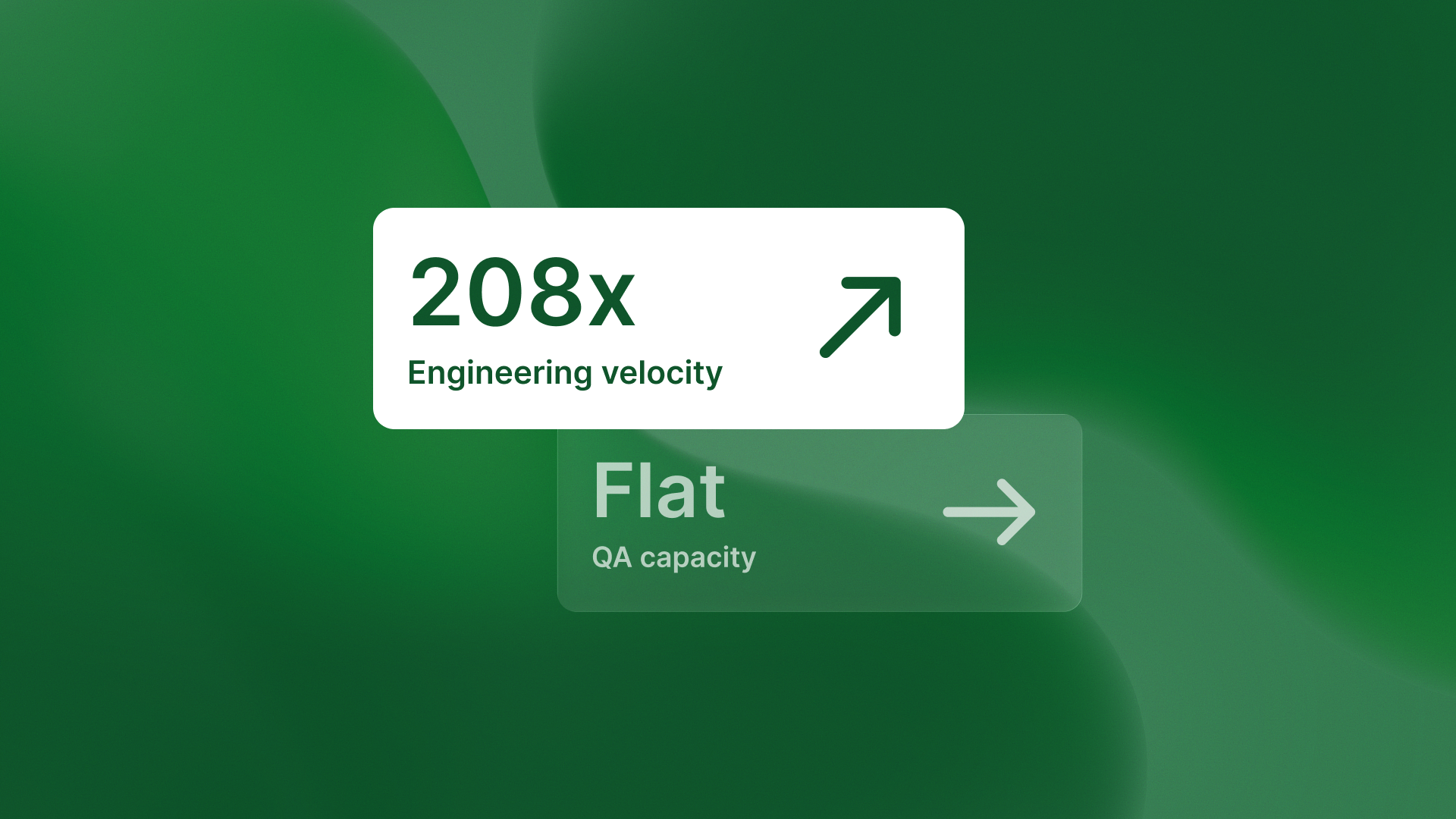
June 2025. A Series B fintech company hits $20M ARR. They discover that their 2-week QA regression cycle is the single biggest threat to their product roadmap. I call this the Founder's Dilemma. It is the specific moment where engineering velocity officially outpaces human testing capacity.
I saw this firsthand at Islands. We were helping them manage high-velocity builds across 8-15 simultaneous projects. When your team starts coding 25% faster with AI tools, the manual bottleneck doesn't just stay the same. It compounds. Scaling QA is not about hiring more heads. It is about a founder's QA decision framework that prioritizes autonomous intent over manual repetition.
The documentation trap in manual scaling
Effective manual QA requires strict documentation and steady environments. This approach fails to scale in rapid DevOps environments (Kanopi). When you hit the $5M ARR mark, document-heavy manual QA becomes one of the primary engineering velocity bottlenecks.
You also face a communication tax. Incomplete bug reports create endless back-and-forth cycles between QA and developers. This hidden tax eats into your sprint capacity. It forces senior engineers to spend hours clarifying reproduction steps instead of shipping features.
The brittleness factor
Traditional automation scripts like Selenium create a maintenance tax. This tax grows as your code volume increases. Implementation-based scripts break during small UI changes. This contrasts with intent-based testing which focuses on what the user should achieve.
The hidden economics of lag
You end up paying an automation tax. This tax can multiply your visible budget 3:6x because of the 3:6 month hiring lag for QA engineers. It is an economic drain on the business. Many founders and agency owners underestimate by 30-50% until the first invoice arrives.
The founder's qa decision framework for autonomy
The $5M:$50M ARR mark is the critical velocity wall. Manual costs and talk-heavy overhead become too expensive for the business to sustain. Companies often see QA cycles stretch to 2 weeks, even while developers ship daily.
This is where QA flow becomes a competitive necessity. It offers a 3-day autonomous cycle. If you hit this wall, you must evaluate your hiring sequence. You need to ensure your infrastructure matches your growth rather than just adding more manual testers who can't keep up.
Manual vs autonomous testing:
- Manual: Scales with headcount;Autonomous: Scales with compute
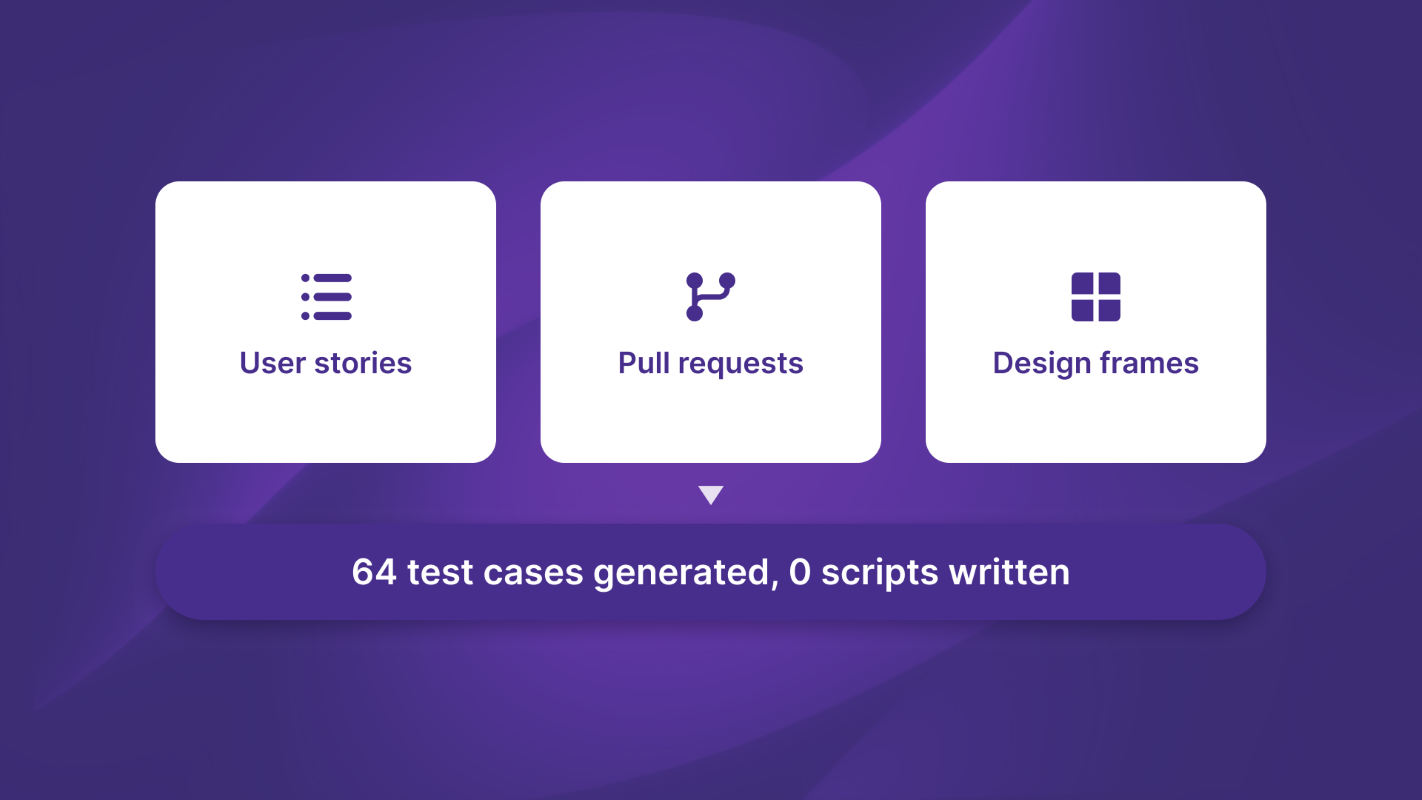
- Manual: Limited by documentation;Autonomous: Driven by design intent
- Manual: 2-week cycles;Autonomous: 3-day turnaround
- Manual: Brittle implementation-based scripts;Autonomous: Persistent intent validation
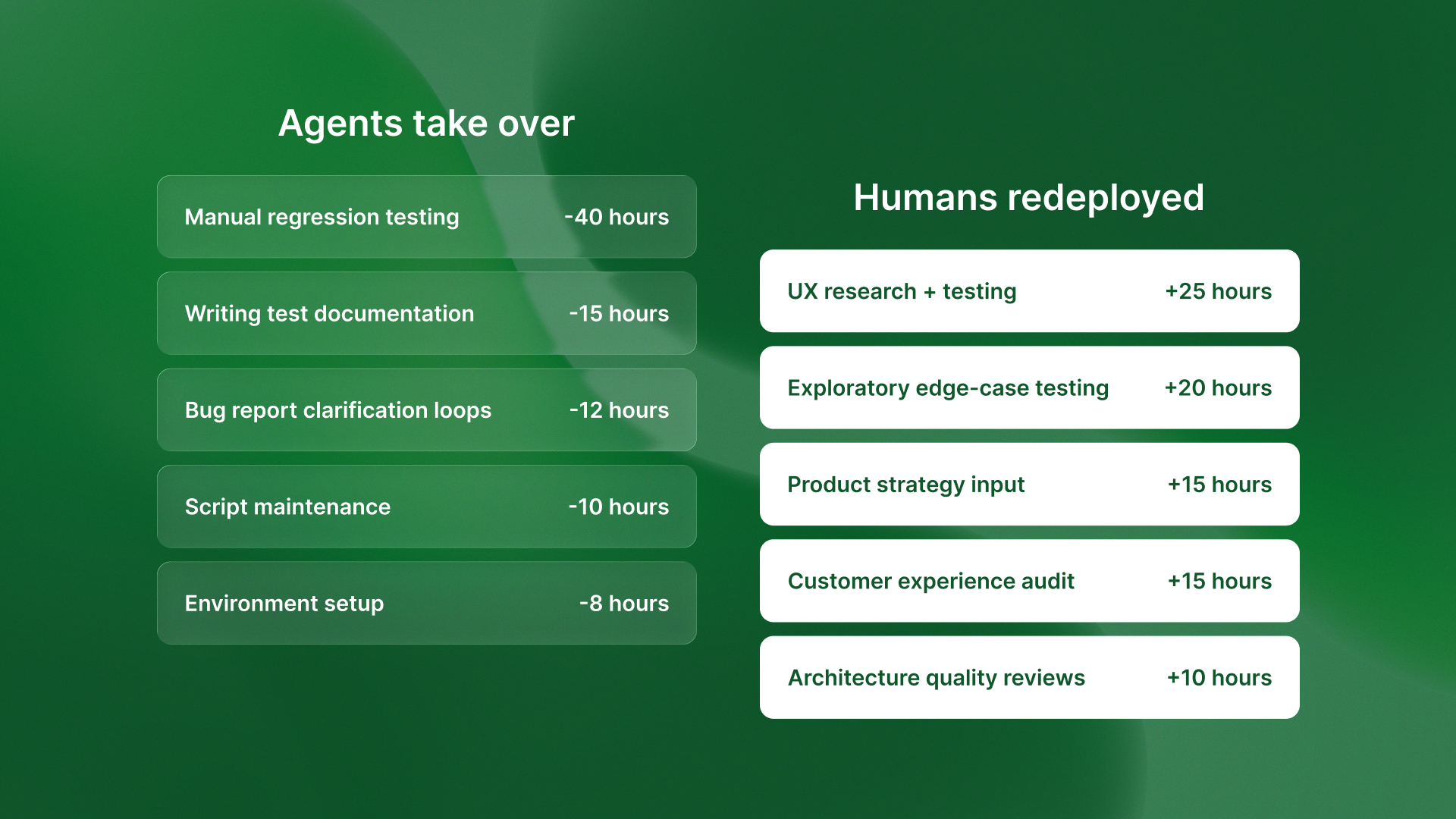
Building your engineering infrastructure
Developers now ship 208x more often than they did five years ago. Because of this, manual QA is a horizontal solution to a vertical problem. You need the right QA infrastructure for startups to survive the scale-up phase.
I analyzed why many technical transitions fail at this level. Often, it's because the marketing foundations or internal systems aren't ready for the influx of new features. Senior leaders must move QA talent from running tests to UX strategy.
You can start by reducing QA cycle time through an autonomous engine. This allows your team to move beyond internal testing and focus on thought leadership and market positioning. Are your hiring processes structured to find architects, or are you still hiring for manual maintenance?
The takeaway
Autonomous testing is not about a new tool. It is an architectural shift. As you scale toward $50M ARR, your primary goal is removing the human bottleneck in test generation. Small businesses and startups now use AI tools for growth across every department. QA should be no different.
The speed you get from AI coding tools only matters if you can check the changes. You need to be able to confirm that the updates are correct. If your validation takes two weeks, your development speed is an illusion. Break the cycle. Focus on intent.
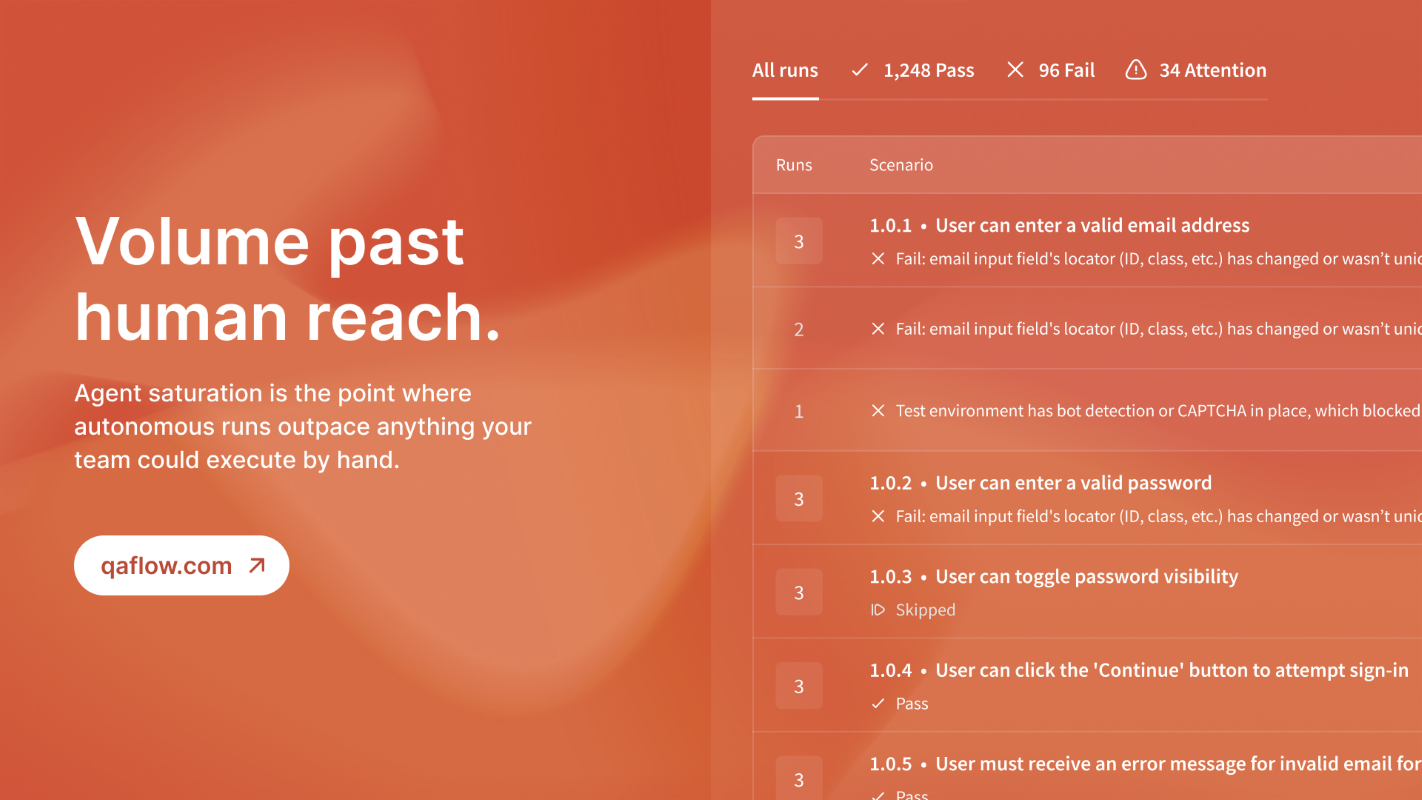
Stop the manual bottleneck and reclaim your engineering velocity. Start free with QA flow today to automate your intent-based testing.

.png)