.svg)
.svg)
Why exploratory testing catches critical bugs regression suites miss


Regression testing consumes 40-50% of your QA team's time.
That's capacity you could be spending finding bugs that actually matter.
QASolve's 2025 report confirms what every VP Engineering already knows: regression testing eats half your QA bandwidth. The bottleneck isn't execution speed. It's capacity allocation. Your QA engineers spend weeks writing test cases by hand. They also update fragile selectors. This work replaces exploratory testing that finds critical bugs.
The regression testing bottleneck
Scaling engineering teams face a binary choice. Hire QA engineers proportionally as the team grows, or accept longer release cycles. Both options are expensive.
Proportional hiring burns budget. Longer cycles slow product velocity.
The real problem: regression testing doesn't scale linearly with team size. A 10-person engineering team might need 50 regression test cases. A 100-person team needs 500. But writing manual test cases and maintaining selectors grows fast, not step by step. This is because each code refactor can break fragile Selenium or Cypress scripts.
QASolve reports that 60% of teams prioritize automating regression testing specifically to free manual testers for exploratory work. They understand the strategic resource question: low-value regression work prevents high-value exploratory testing.
Why autonomous regression testing changes the equation
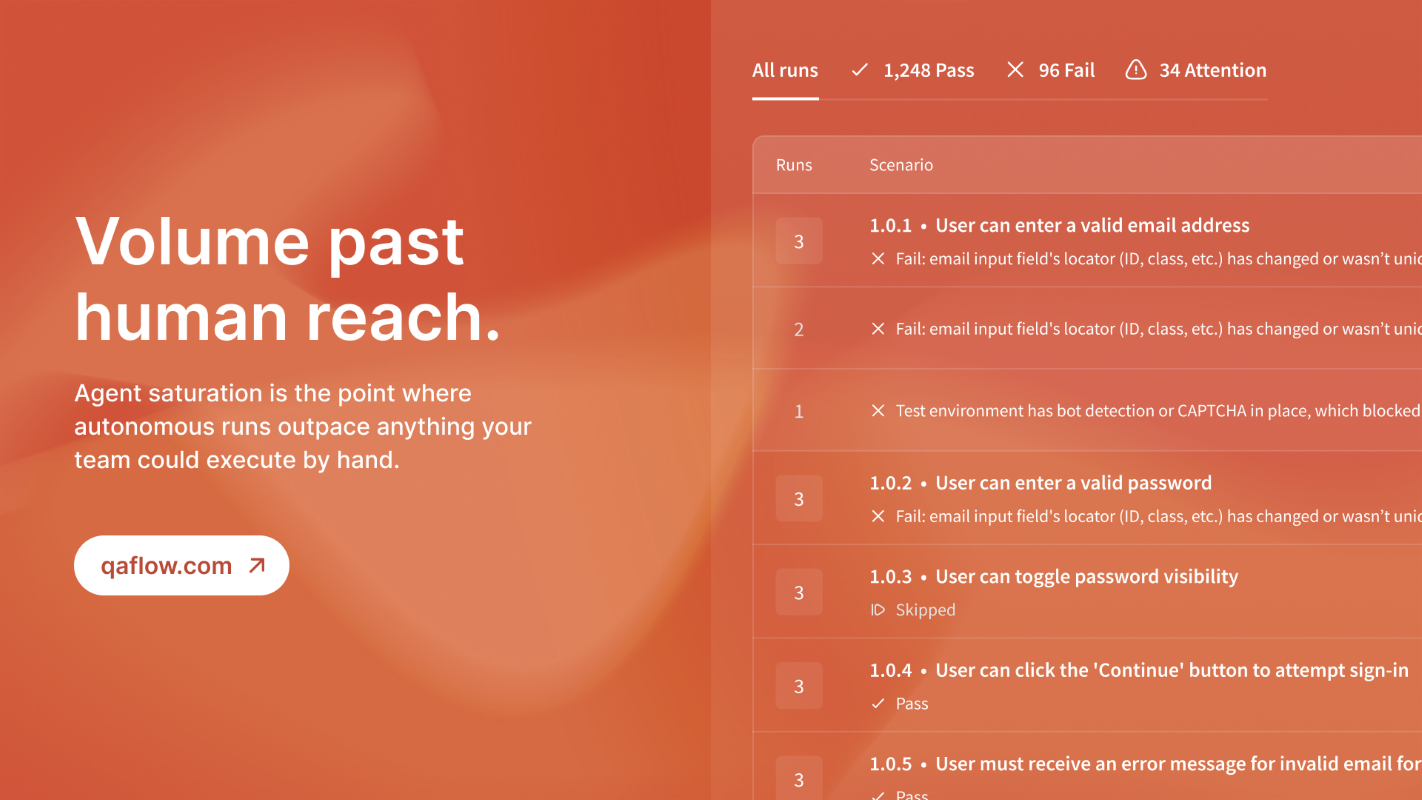
Traditional test automation still requires humans to define tests and update selectors when code changes. Most tools still make QA engineers write the tests.
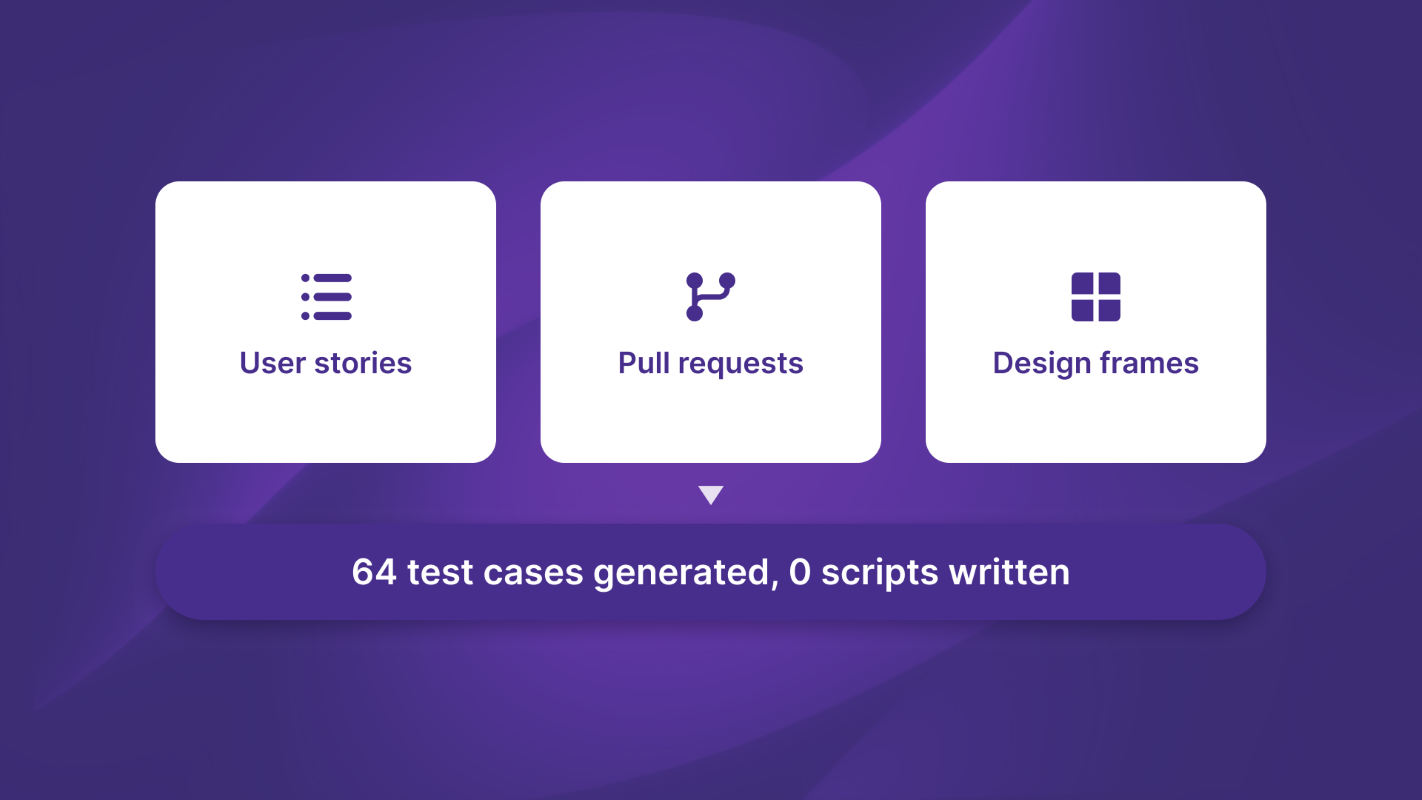
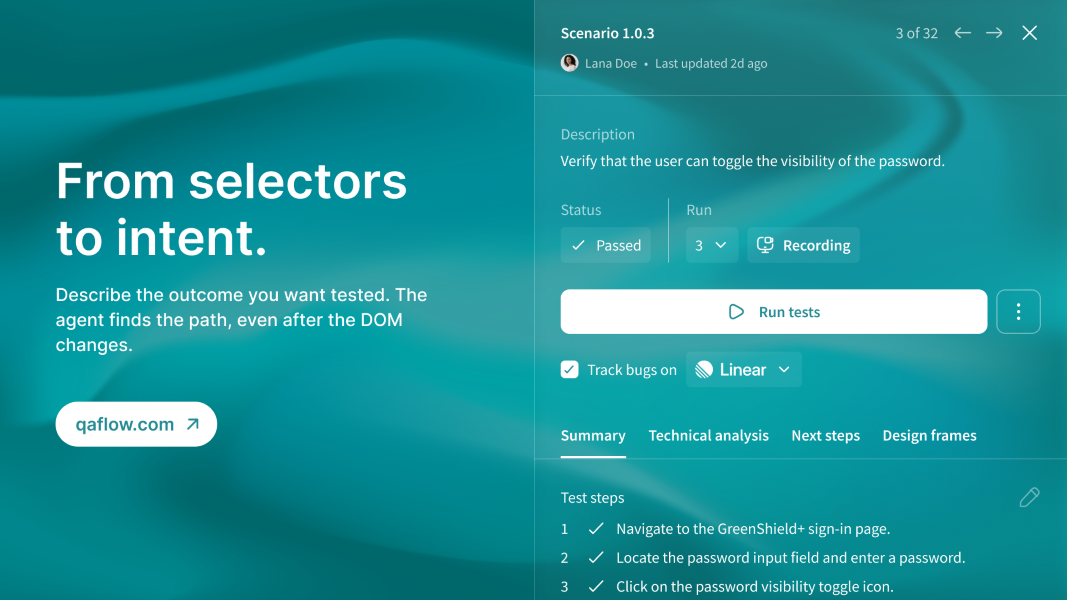
QA flow eliminates that bottleneck entirely. The multi-agent system reads Figma specs and commit messages.It then generates intent-based tests on its own. These tests still work after code refactoring. No manual test case writing. No selector maintenance. The tests adapt when the code changes because they're generated from design intent, not brittle CSS selectors.
This isn't about executing tests faster. It's about freeing 40-50% of QA capacity for work that requires human judgment.
Exploratory testing catches bugs regression suites miss
When QA engineers stop spending half their time on regression work, they can focus on exploratory testing.
This matters because exploratory testing finds critical bugs that regression suites miss. These include UX edge cases, domain-specific scenarios, and integration failures in certain user workflows.
Research from Satisfice Research from Satisfice shows exploratory testing finds three times more critical bugs per hour. It does this by focusing on areas autonomous systems cannot evaluate.

What exploratory testing requires
Session-based testing frameworks: Time-boxed exploration with clear charters and note-taking structures.
Persona-based scenarios: Testing as specific user types with real domain knowledge and workflow context.
Domain-specific edge case identification: Understanding where business logic breaks under real-world conditions.
These aren't skills most QA engineers learn in traditional regression-focused roles. Strong test design matters here. Exploratory work requires real-time thinking about equivalence partitions, boundary values, and state transitions, not just scripted steps.
The ROI isn't just faster test cycles. It's higher quality bug detection.
The transition strategy
Start with stable regression suites. Login flows, checkout workflows, and core user paths. These are high-volume, stable, and well-understood. Let QA flow generate tests for these workflows first.
Retrain QA engineers on exploratory testing. This isn't optional. Your QA team needs new skills to take advantage of freed capacity.
Measure bug detection quality. Track bugs caught per hour, severity distribution, and cycle time reduction. The metrics prove ROI to executive stakeholders and validate the capacity reallocation strategy.
The takeaway
Regression testing is necessary but low-value. Exploratory testing is where critical bugs hide.
Autonomous regression testing isn't about replacing QA engineers. It's about redeploying them to work that matters.