AI QA for Startups: Evaluating AI Agents vs. Jira's Native Automation Features

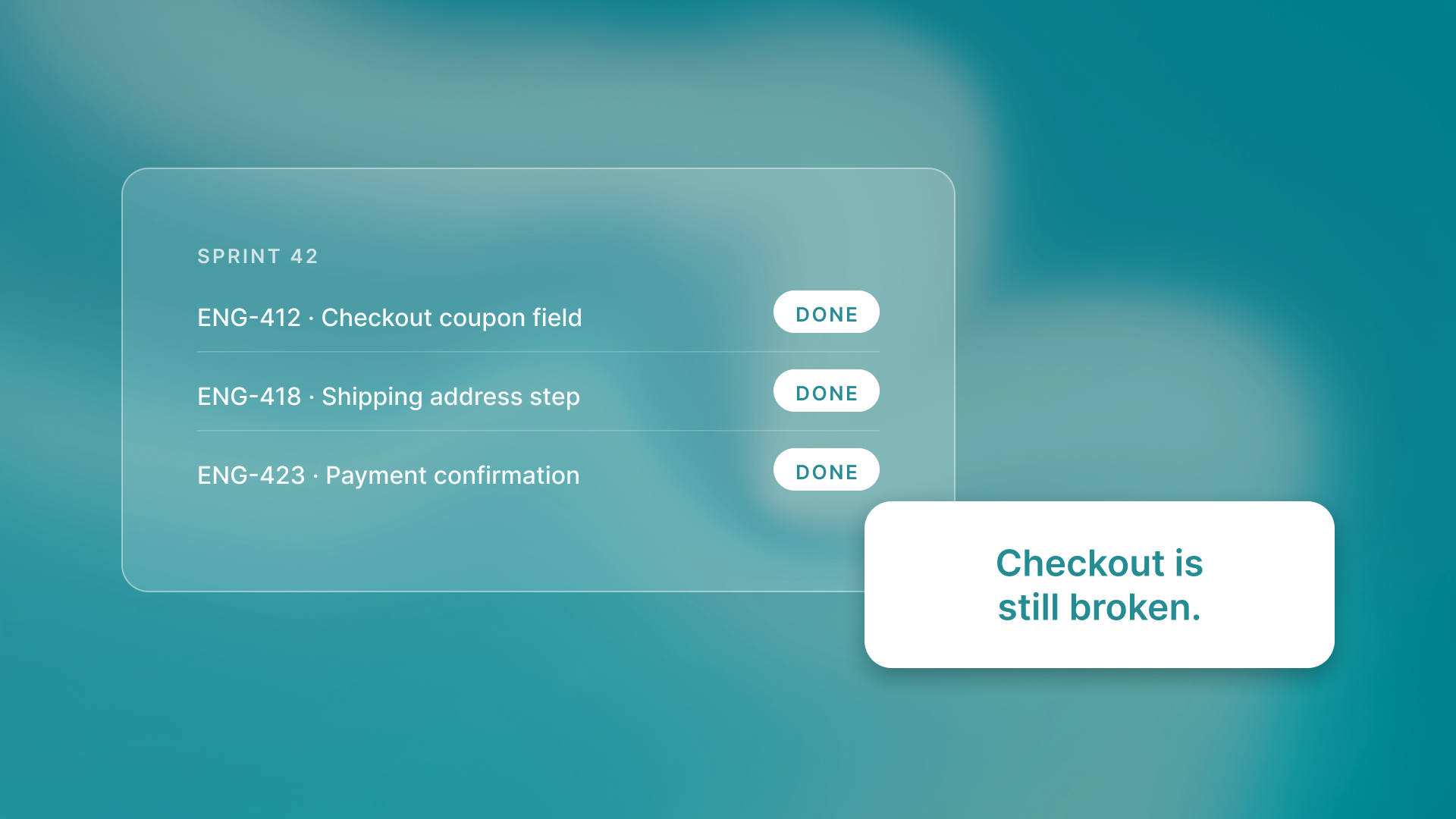
A VP of Engineering once showed me a perfect sprint board. Every ticket moved with robotic precision, powered by Jira's native automation. Then I checked the production logs. Critical checkout flows were failing. The UI was a mess of regressions. AI QA for startups, you have to look past workflow hygiene and tackle technical execution. Most leaders think they're solving for quality. They're automating administrative overhead.
I've seen this pattern repeat across Series B and C startups. You rely on the tools built into your project management stack because they're convenient. Jira automation and Atlassian’s Rovo agents have gotten smart about code, but they still work at the code level, not the product level. Specialized AI agents fill that gap by converting design intent into tests and handling maintenance work that native tools ignore. The difference is moving a ticket versus ensuring the code actually works.
The architectural wall: Jira Rovo vs. AI QA for startups
Jira Rovo and Atlassian Intelligence help teams collaborate by summarizing reports and converting context into Jira items 30% faster. That speeds up internal productivity, but it only improves documentation. These AI teammates focus on task summaries and sprint tasks. They do not handle the technical details of automated UI testing. Relying on these features for quality is a mistake because they lack the sensory input to see what is happening on the screen.
Workflow hygiene vs. technical execution
Native features are reactive, moving tickets based on rules or summarizing bug reports for engineers. Specialized QA agents are proactive: they convert designs to tests and audit sites 24/7. They do more than summarize a bug: they find it by running technical tests that native Jira tools cannot do. That shift from reactive chatbots toward autonomous agentic systems means agents execute workflows independently. AI agents integrated with Jira can reduce sprint administration time by 40% (ASCN).
Why 'AI teammates' aren't QA engineers
The difference is how the tool sees the application. A specialized agent reads the DOM and the rendered page to move through your app the way a real user would, so it can spot when a deployment breaks a flow. Native Jira automation lacks that sensory input. It knows the ticket status but cannot see if the latest deployment broke the checkout flow. Relying only on native tools creates a visibility gap where the workflow looks healthy but the product might be failing. You cannot document your way to a stable product.
Why native automation fails the maintenance test
As startups grow, the cost of fixing brittle scripts becomes a velocity tax. Native automation can start a script but cannot fix one. That leads to a risk of agent saturation, where traditional script-based automation creates mounting maintenance debt. I observed one team that spent 40% of their week updating selectors that Jira automation could not track.
Jira native automation vs. specialized AI QA agents
Jira native automation requires manual script updates and offers no UI regression detection. Its test creation is manual or script-based, and its triage is rule-based status changes. Specialized AI QA agents reduce maintenance by 65% via self-healing, speed test creation by up to 70%, use visual AI for UI regression, and autonomously triage tickets.
The self-healing advantage for high-velocity teams
The maintenance tax is the biggest drain on lean engineering teams. Traditional frameworks break when a developer changes a CSS selector or a UI component. Specialized agents solve this with self-healing, reducing test maintenance effort by 65% (TestMu AI). Most tools remain limited as script generators. True autonomy requires reading design artifacts to eliminate manual scenario planning. By adopting AI-powered software testing, teams can focus on strategic improvements instead of fixing broken selectors.

Eliminating the 65% maintenance burden
Self-healing logic lets an AI QA engineer stop fixing broken selectors and focus on quality strategy instead. When the UI changes, the agent finds a failure in a test step that used to pass. It then looks at the new DOM structure and code changes to find the moved or renamed element. It updates the test logic automatically, keeping the suite green without a human doing the work.
From Figma intent to production-ready bug tickets
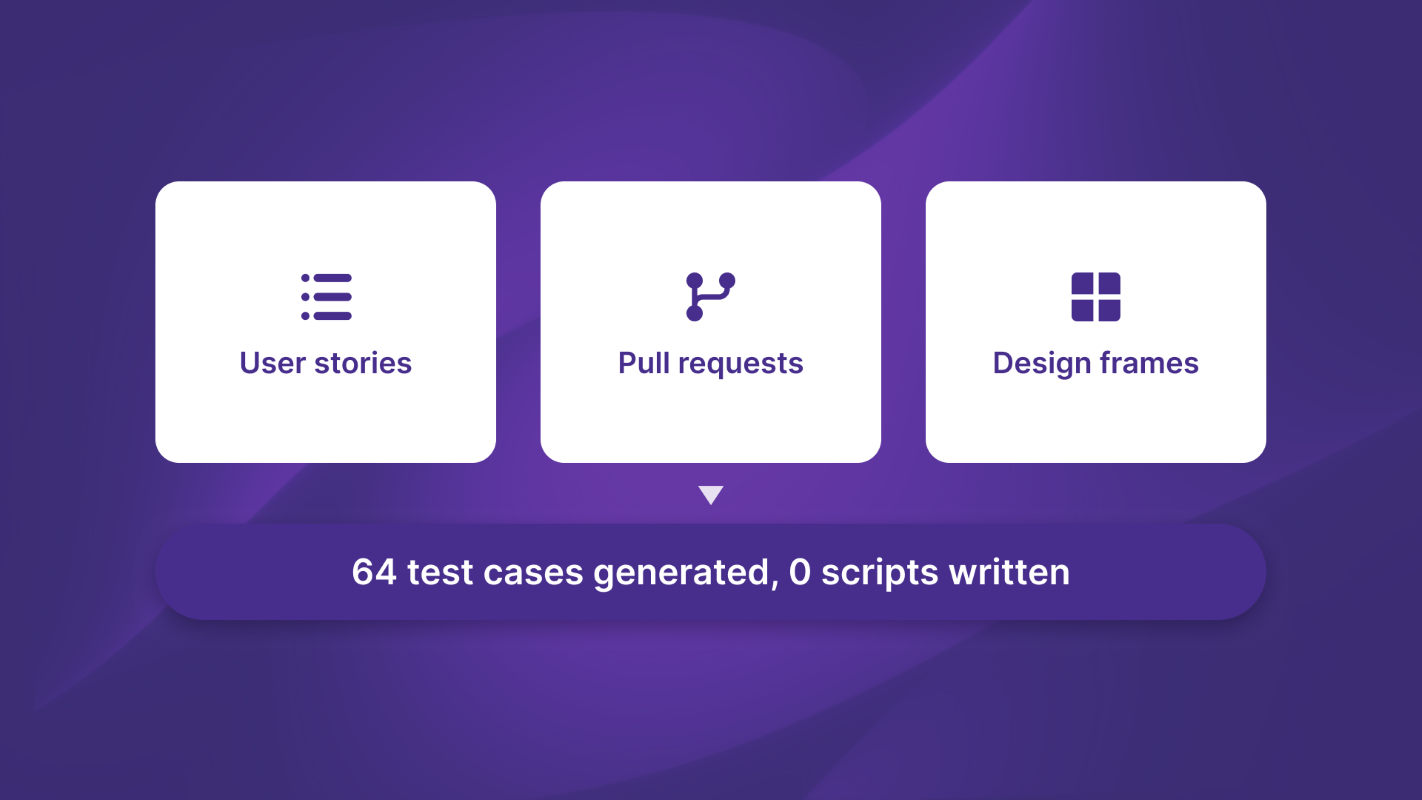
These agents can read Figma files and GitHub requirements. AI-powered QA technologies speed up test creation by up to 70% compared to traditional scripted methods (Towards AI). They connect design intent to product reliability. Every new feature gets a test before a human even sees it, avoiding the QA velocity mismatch that slows down growth. Without autonomous test generation, systems remain bottlenecked on human test specifications.
Strategic deployment: where to use each tool
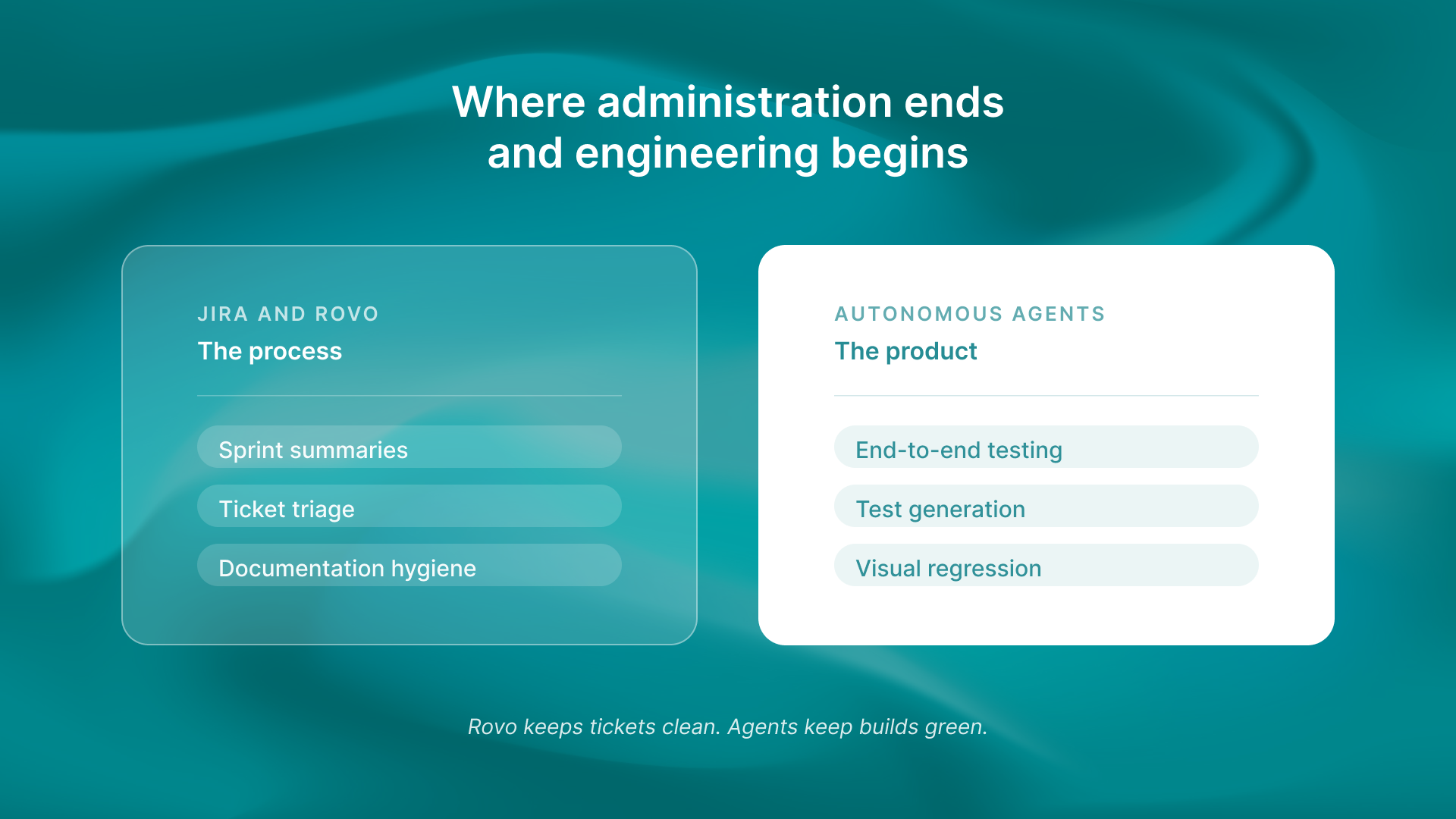
To build a production-ready QA model, leaders must use both tools wisely. The economic choice is simple: automate the process with Jira and the product with agents. If you fail to separate these, your velocity will eventually hit a wall.
Summary: diagnostic questions for your stack
Start by asking how many hours a week your team spends manually updating Jira tickets versus fixing broken tests. Does your current automation see a visual regression, or does it only know if a ticket is 'In Progress'? Does your QA headcount need to double every time you double your feature output? Is your 'AI teammate' actually running code or just summarizing what humans already did? If you cannot answer these, your engineers are spending time on maintenance rather than strategy.
Ready to eliminate your maintenance burden? Sign up for QA flow today.