.svg)
.svg)
Redesigning QA Operating Models for AI-Driven Pressure

I watched a Series B startup triple its output in six months after rolling out AI coding assistants across engineering. Release velocity? It dropped. The QA operating model was still built for manual workflows: trying to audit a flood of AI-generated code with a human gate. That's a structural mismatch. AI QA for startups isn't optional;it's the only way to keep pace. Hire someone who can design that transition.
Most engineering leaders pay a heavy QA Tax. Every manual bug report, every brittle script that needs updating, stalls a high-velocity release. Human-gated testing for every feature push builds a mountain of technical debt that eventually collapses your roadmap. That tax doesn't go away just because you hire more people. the QA bottleneck persists because traditional approaches—hiring proportionally and adding more automation scripts—fail to keep pace with modern release demands.
The math of manual QA scaling failure
Traditional QA models assume a linear relationship between output and testing headcount. If AI triples your output, a manual model says you need three times the QA engineers. That math doesn't work for a scaling B2B SaaS company. You can't hire your way past a velocity bottleneck when AI sets the pace. Features ship with known defects just to keep the release train moving, creating a bottleneck that kills growth. When teams can't keep up, the fix isn't more people;it's a redesign focused on systemic quality rather than manual checks.
Engineering resource allocation has hit a turning point. QA is the first function where autonomous agents can handle most repetitive tasks (Augment). Your testing stack is the most fertile ground for full autonomy right now. Deploy agents that understand design intent, and you shift from managing people to managing systems. That shift matters because teams that adopt AI coding tools without rebuilding testing workflows create technical debt at scale. Modern engineers should focus on these autonomous systems, not manual scripts.
From quality control to quality intelligence
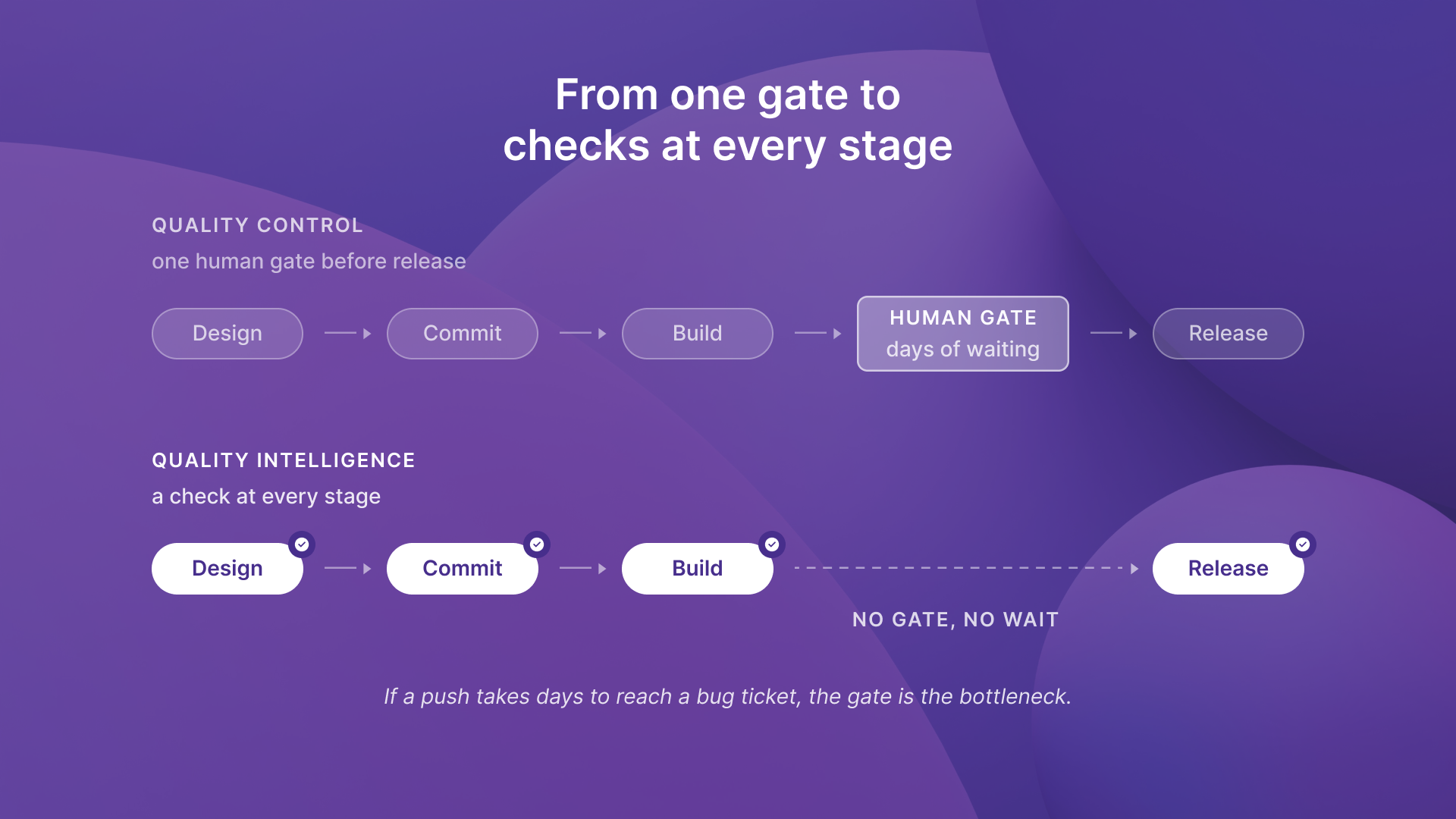
To manage the pressure of AI-driven delivery, enterprises are shifting toward Quality Intelligence (QualiZeal). It manages the surge in code without adding manual gates. It's proactive and integrated. The shift changes what an AI QA engineer does: demand moves toward strategic orchestration, away from manual execution.
I categorize this shift using these specific characteristics: the move from automated testing, which requires manual script updates every time the UI changes, to autonomous testing, which uses AI to self-heal and adapt without human intervention. Manual gates are reactive reviews that stop the pipeline for days, while Quality Intelligence proactively analyzes GitHub metadata to predict where bugs will occur. To maintain high standards, teams increasingly rely on QA flow reviews to identify systemic weaknesses before deployment.
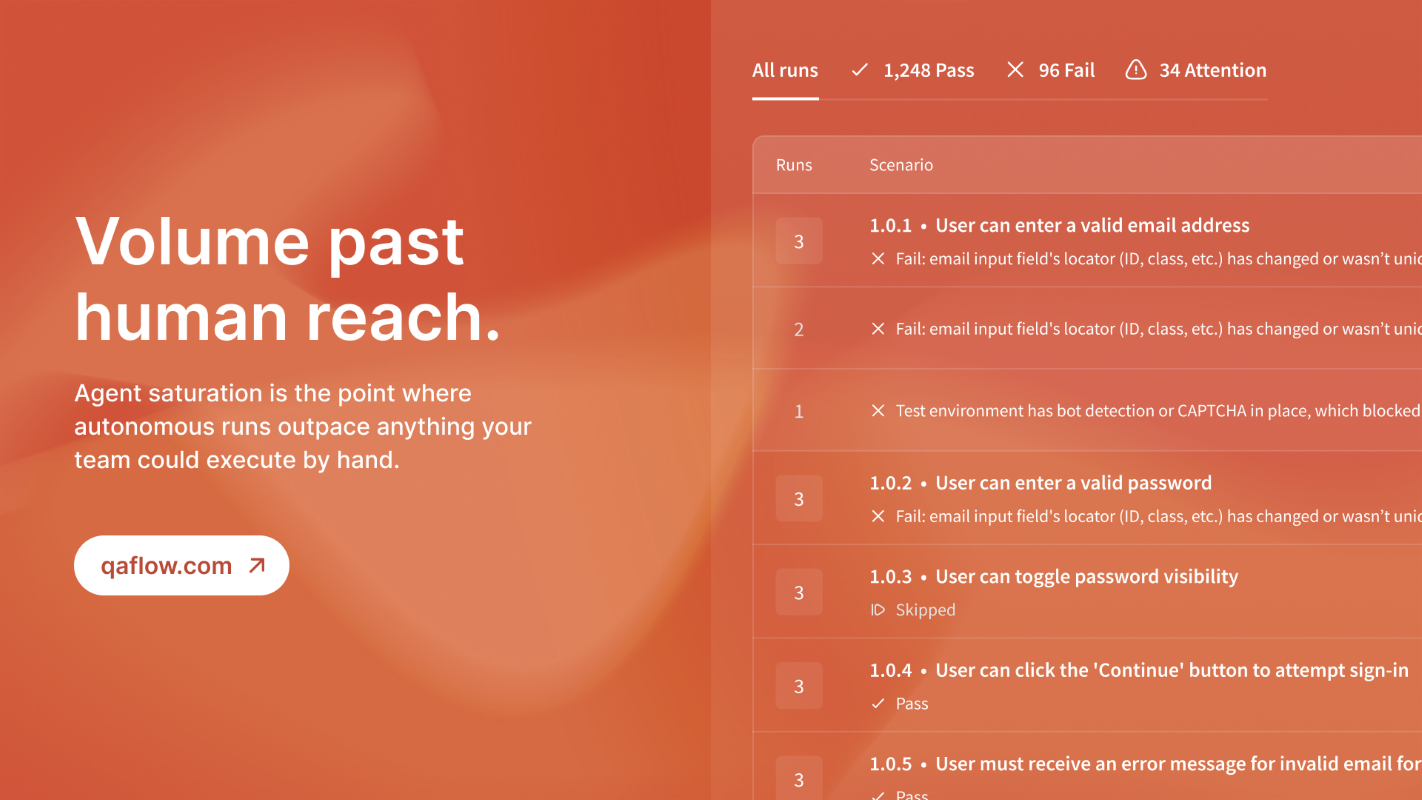
Script maintenance eats up to 60% of a QA team's time. architect autonomous testing into your workflow, and you stop testing implementation details: you test intent. Tell the agent the intended user outcome instead of writing a script for a specific CSS selector. The system survives refactors, and intent-based testing stays synchronized with development speed.
AI QA for startups: a framework for high velocity
Scaling AI means revamping the operating model to avoid technical debt (CIO Dive). Treat quality as an engineering discipline, not a post-processing step. Continuous testing AI protocols validate every commit in real-time. That requires a structured evaluation framework to make sure the engineers building these systems can handle AI-driven complexity.
Implementation steps for autonomous workflows
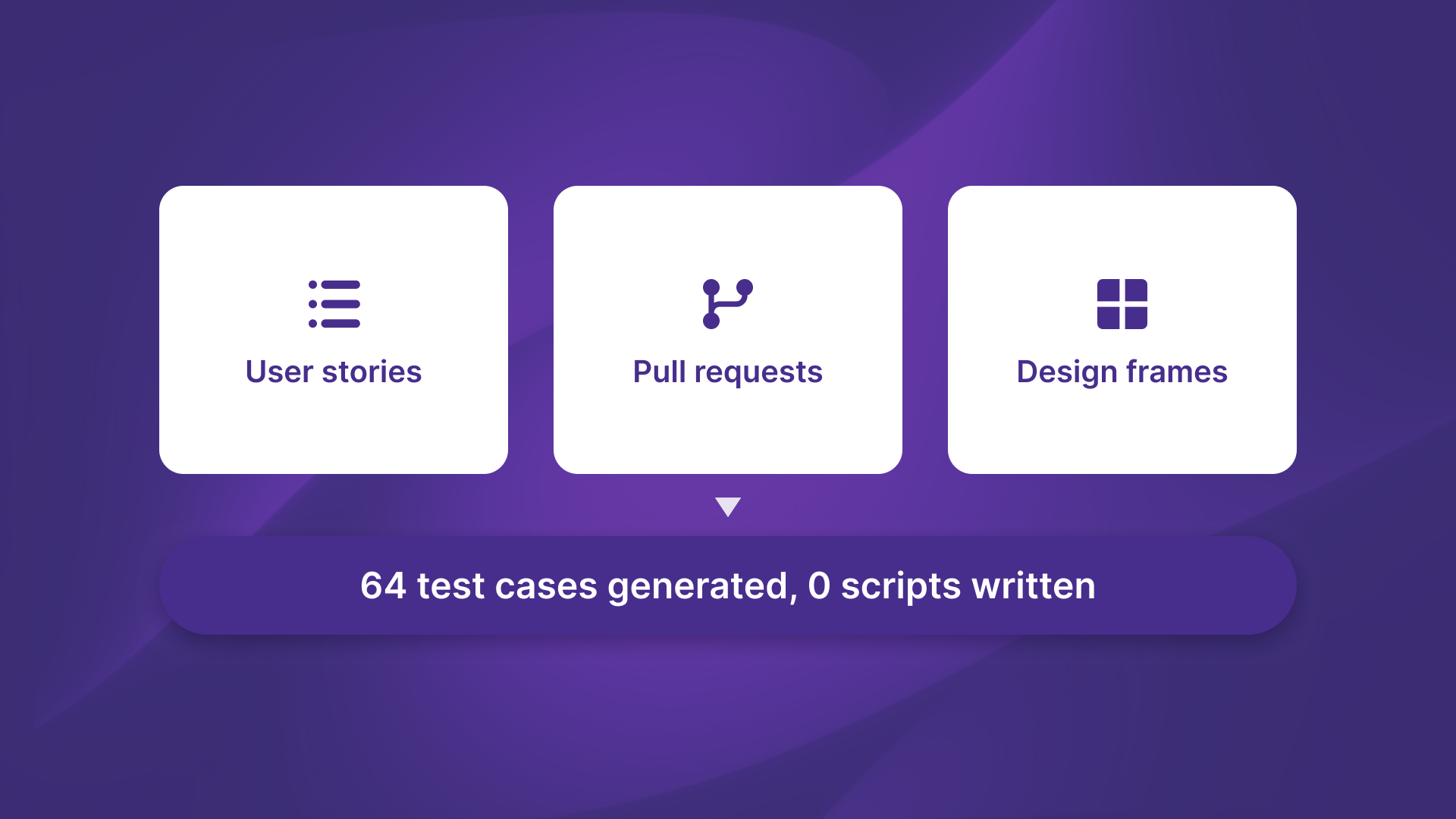
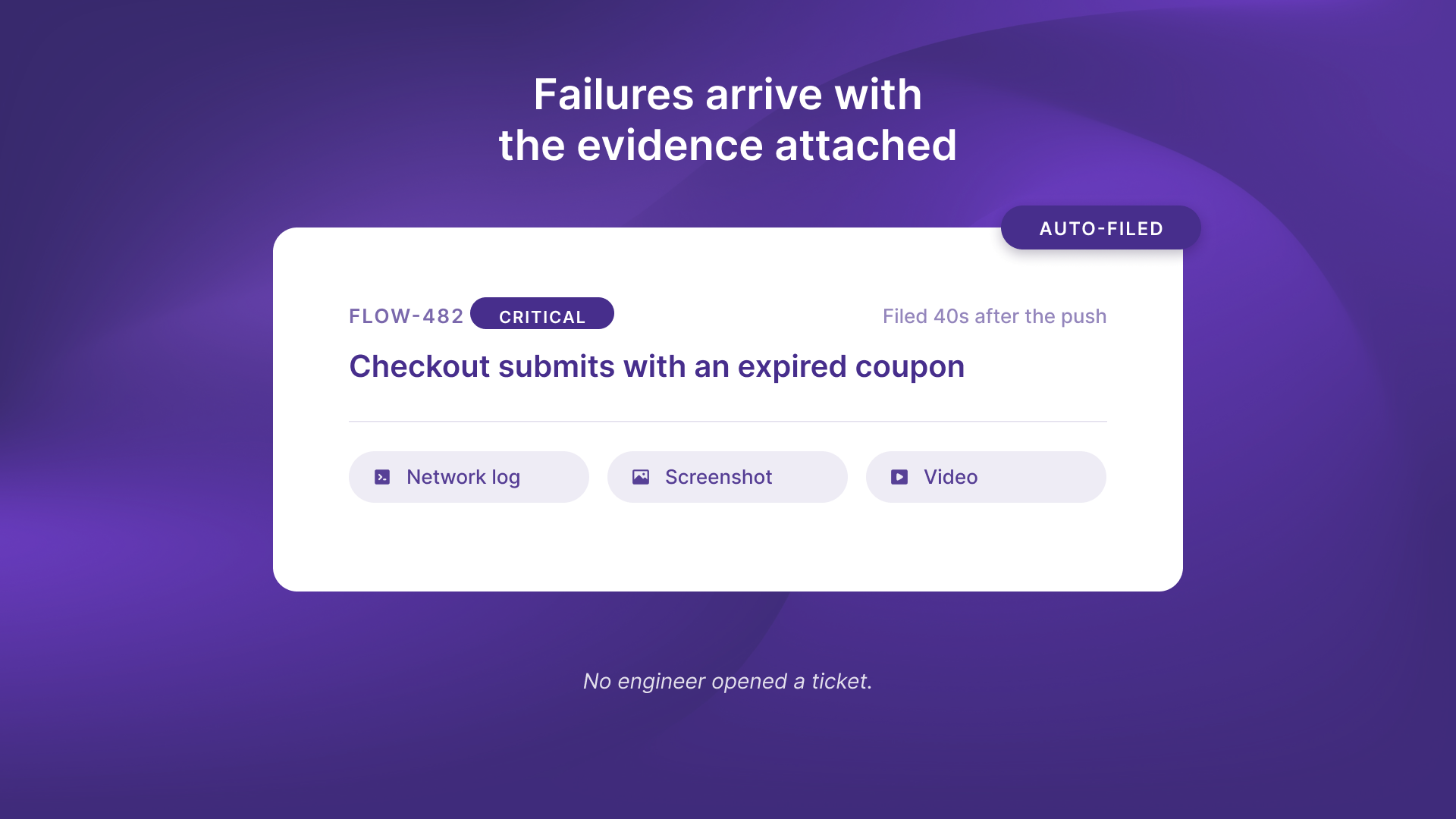
Replace manual regression suites with autonomous agents that trigger on every GitHub push. Implement a founder's QA decision framework that derives test cases directly from Figma designs and PR metadata. Integrate autonomous bug reporting before a human eyes the build, similar to how production-grade RAG pipelines use incremental indexing to maintain accuracy.
The takeaway: redeploying human intuition
When you eliminate the regression burden, you redeploy your team. Talent should focus on high-impact exploratory testing, security edge cases, and user experience nuances that agents cannot yet grasp. I have seen teams use this transition to cut cycle time from weeks to hours while increasing test coverage.
You can continue paying the maintenance tax, or you can adopt an autonomous operating model that scales with your AI-driven output. Audit your current cycle time from GitHub push to a production-ready bug ticket. If that number is measured in days, your operating model is already obsolete.
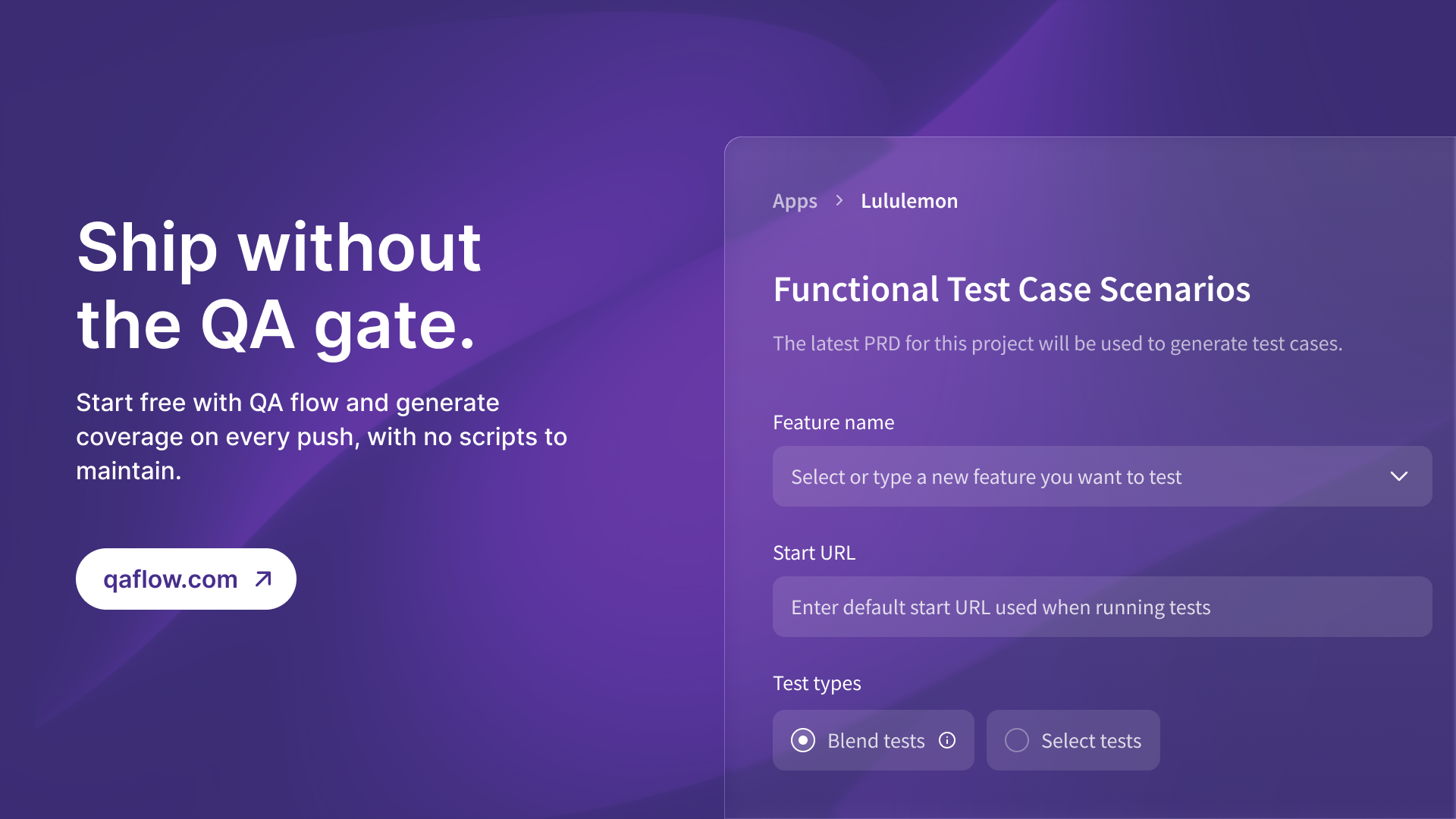
Ready to eliminate your testing bottleneck? Start free with QA flow today.

.png)
.png)