.svg)
.svg)
How to Sync QA Flow with TestRail: A Complete Guide to Centralized Quality

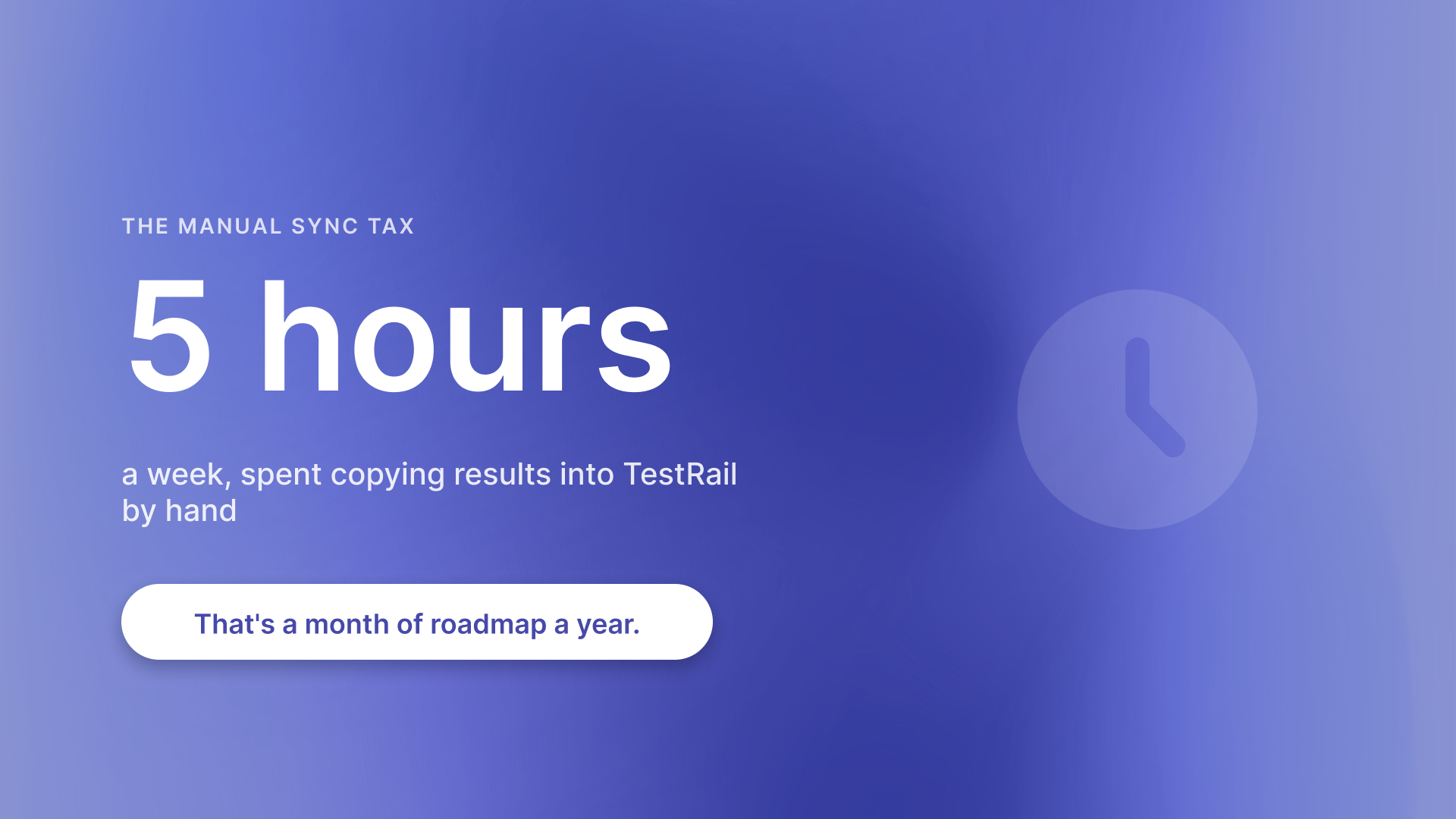
A Series C engineering team usually moves at high velocity, yet quality reporting often remains trapped in a manual bottleneck. When comparing QA flow vs TestRail, the reality is clear: if automated test results do not sync to your source of truth, you lack a quality strategy. You have a data silo. Scaling B2B SaaS teams frequently hit a wall where manual updates become a revenue leak. The time spent manually updating test cases or chasing down logs is a quality tax that slows engineering output.
While autonomous agents handle execution, TestRail remains the vital record for audits and compliance. Connecting these systems bridges the gap between intent-based autonomous testing architecture and legacy management tools. This ensures a shopify pre-launch QA checklist or enterprise deployment remains rigorous without sacrificing visibility.
The architecture of a unified quality record: QA flow vs TestRail
Growth-stage companies need centralized reporting — it's non-negotiable. Integrating autonomous testing with TestRail gives you full traceability across the SDLC. Manual and autonomous results live in one place, which is critical for SOC2 audits and enterprise procurement. Teams trying to kill manual QA bottlenecks often find that the right tooling integration is the actual solution.
Fragmented data stops you from tracking real-time quality trends. Moving to autonomous QA for lean teams lets engineers focus on shipping features instead of status updates. This preserves architectural integrity during growth. If you're scaling from 50 to 500 engineers, your infrastructure has to support their workflows through unified reporting.
Manual syncing as a revenue leak
Manual syncing is a structural bottleneck. Every minute an engineer spends updating a status in TestRail is a minute not spent shipping features. In high-growth startups, that friction slows the entire release cycle. According to QA flow, automating this specific handoff is the highest ROI activity for growth-stage teams.
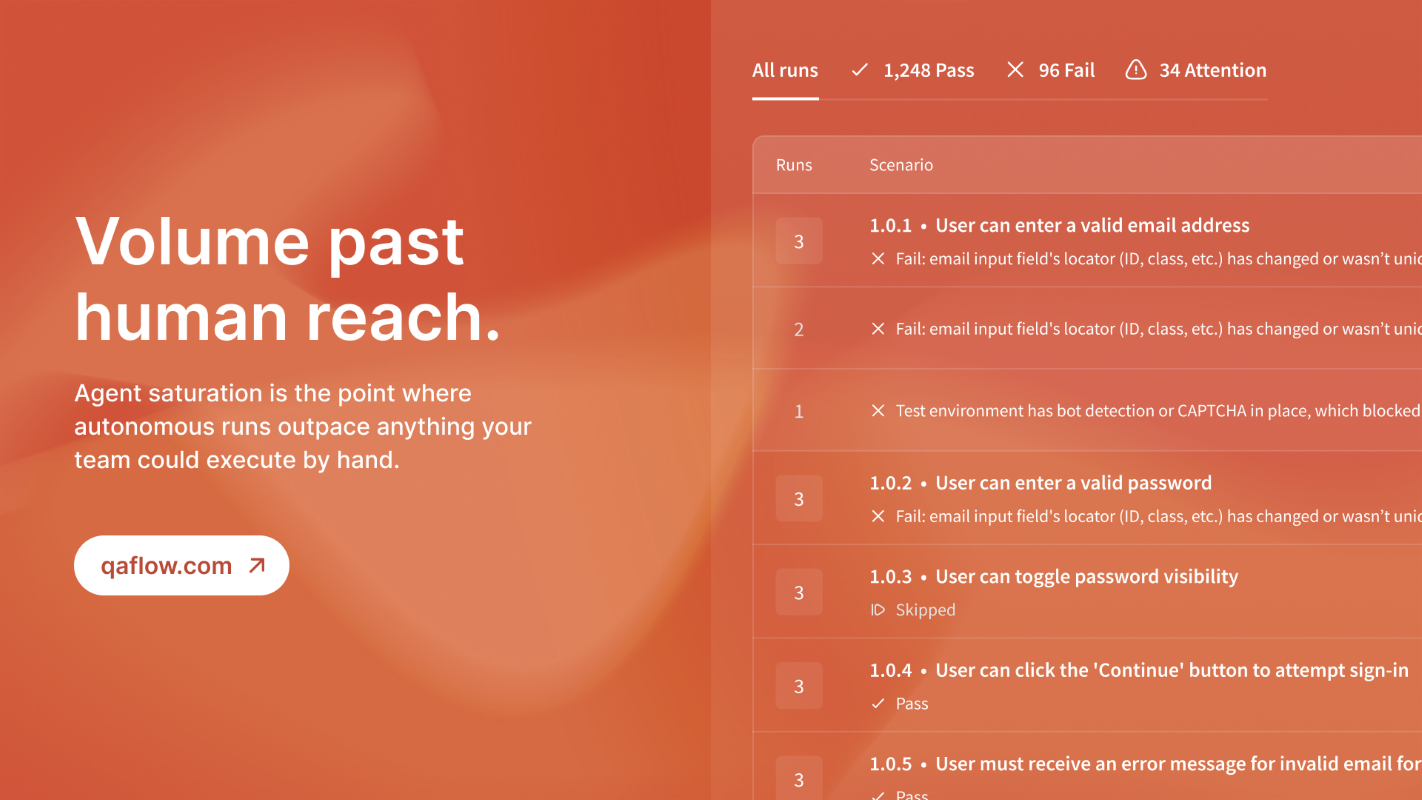
Automating the link ensures intent-based testing agents feed results directly into executive dashboards without human intervention. This shift matters because traditional implementation-based automation often breaks during refactoring, which plants false failures in your record of truth. Syncing these systems means the record reflects the actual state of the product, not the fragility of test scripts.
Mapping QA flow intent to TestRail cases
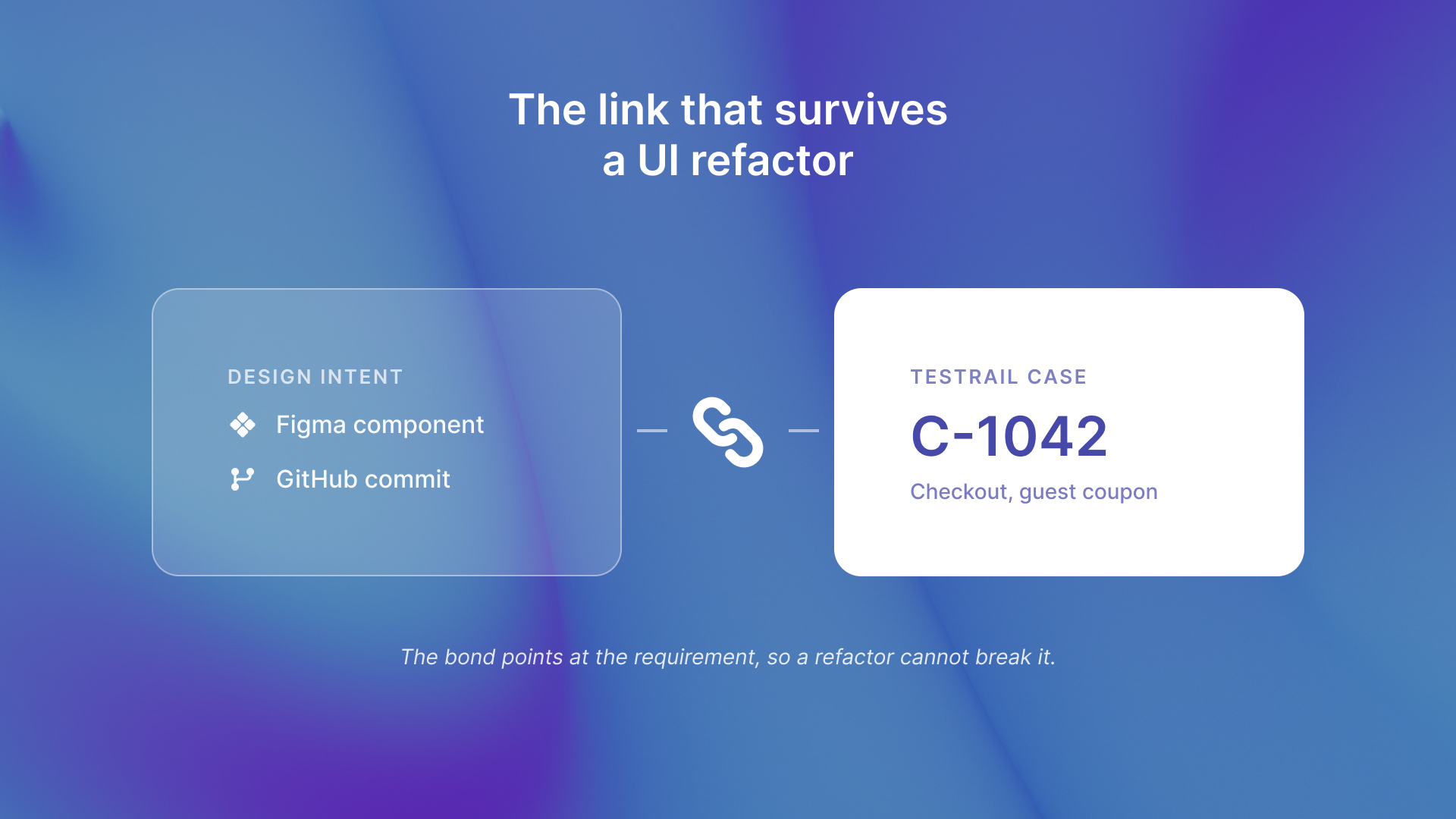
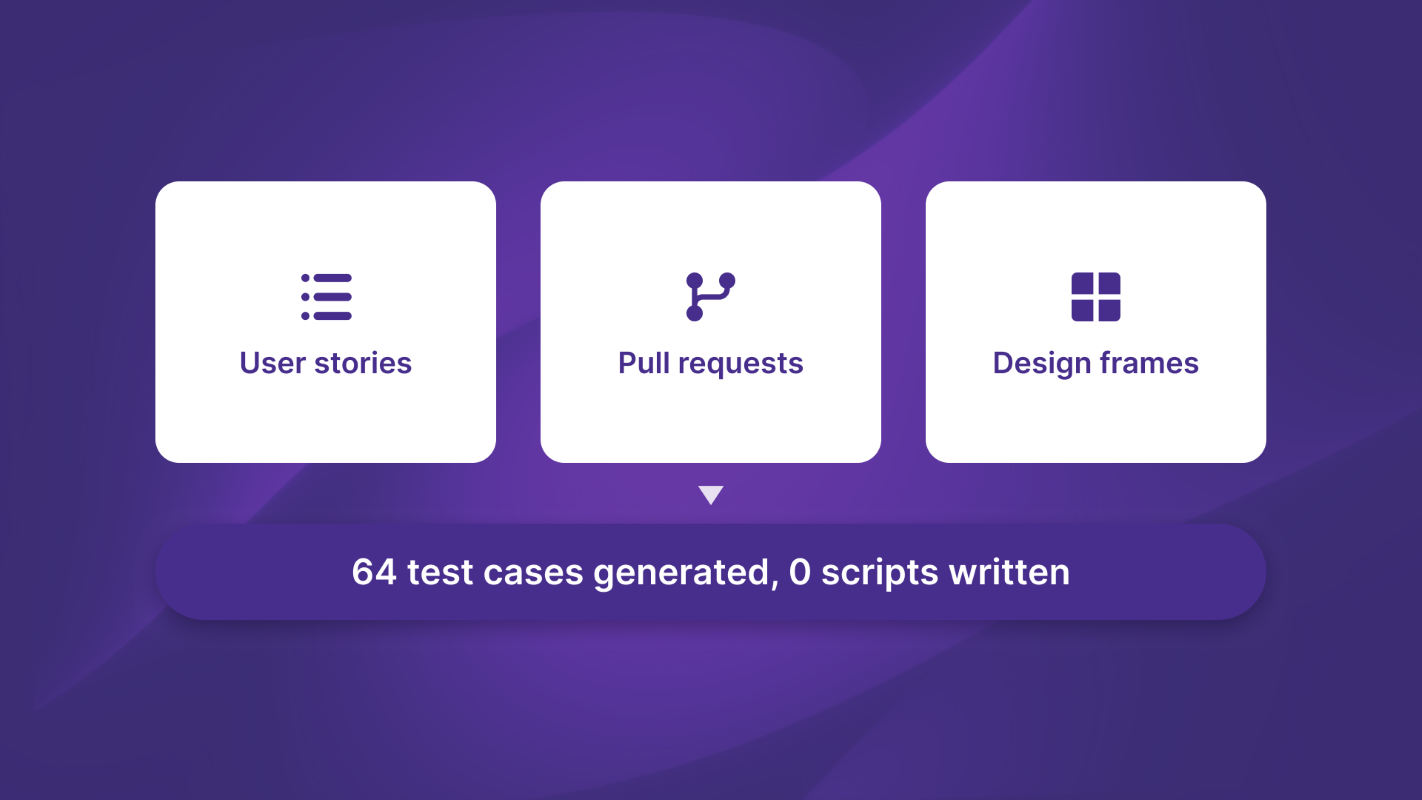
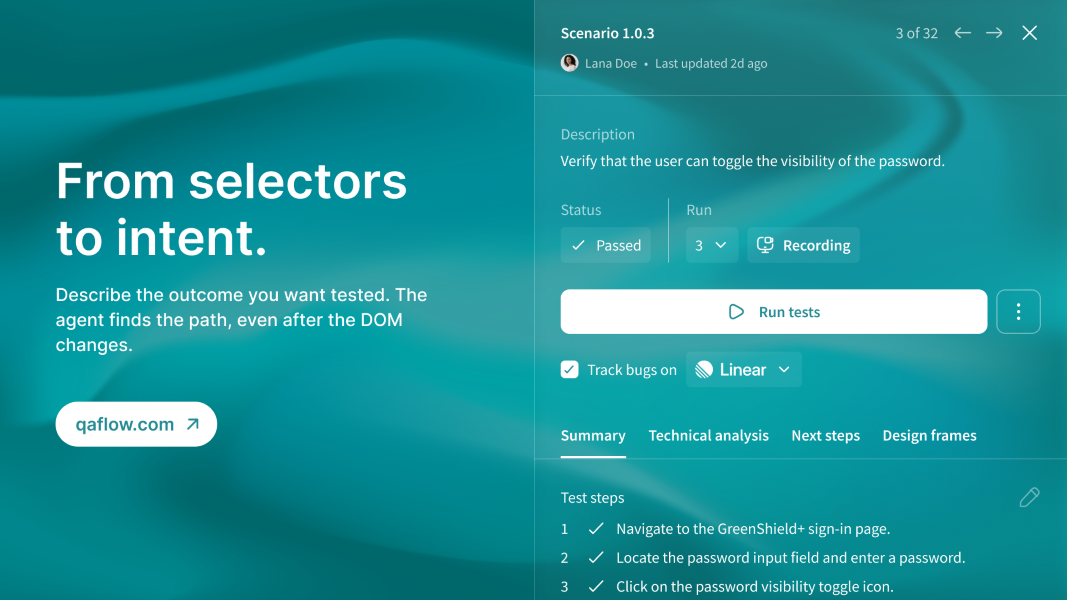
Behavior-based validation beats brittle CSS selectors every time. This approach survives the UI refactors that kill legacy scripts. To sync them, you map the intent or behavior defined in your Figma design files to specific TestRail case IDs. That creates a durable link. Regular QA flow reviews keep these mappings accurate as the product evolves.
This workflow maintains 94.7% bug classification accuracy. While many legacy platforms still require humans to define test cases manually, this method generates durable coverage from design intent and GitHub commit messages. One model scales with your codebase;the other requires a headcount increase for every new feature you ship.
QA flow vs TestRail comparison
Step-by-step: connecting QA flow to TestRail
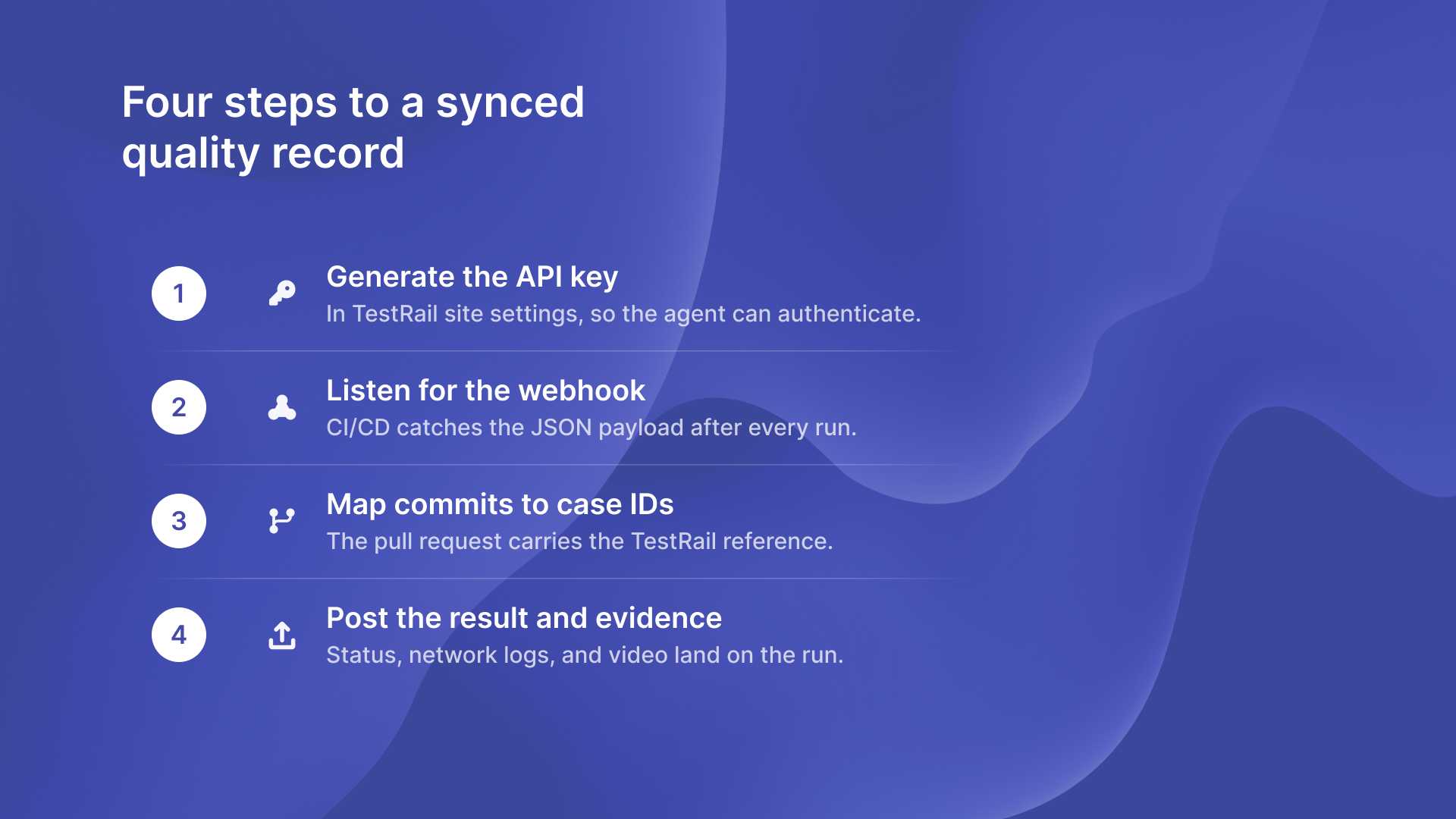
- Generate your TestRail API credentials: In TestRail, go to My Settings → API Keys to generate an API key for authentication. For organizations using OAuth 2.0, configure the appropriate OAuth credentials and scopes under Site Settings → API → Access Management.
- Configure the webhook listener in your CI/CD pipeline to catch the JSON payload after each test run completes.
- Map GitHub commits to TestRail IDs by including the case reference in your commit messages or PR descriptions.
- Automate the status update by using a script to POST the test result and the comprehensive bug ticket data (including network logs and videos) back to the TestRail run.
Authentication note: TestRail also supports OAuth 2.0 for API integrations, giving teams an alternative to API keys with scoped access and centralized token management. Use the authentication method that best fits your integration and security requirements.
The economic reality of centralized QA
Syncing these systems accelerates the entire business. Cutting cycle time from two weeks to three days fundamentally changes your annual feature output. This efficiency is especially important when you're executing a 90-day engineering onboarding plan, where the goal is to minimize ramp time and get new hires contributing to the codebase immediately. Companies often hire an AI QA expert to oversee this transition and maintain high velocity.
Key ROI areas
- Elimination of manual status reporting hours across the engineering organization.
- Full audit readiness for enterprise-level compliance without a pre-audit scramble.
- Reduction in the communication tax between QA leads and product owners by providing actionable bug tickets.
What to ask your engineering team
- How many hours per sprint are engineers spending manually updating TestRail or Jira?
- Do we have a single dashboard that shows both manual and autonomous test coverage?
- What happens to our audit trail if a key AI QA engineer leaves the company?
- Is our current automated test management strategy capable of handling a doubling in deployment frequency?
Choosing velocity without the visibility gap
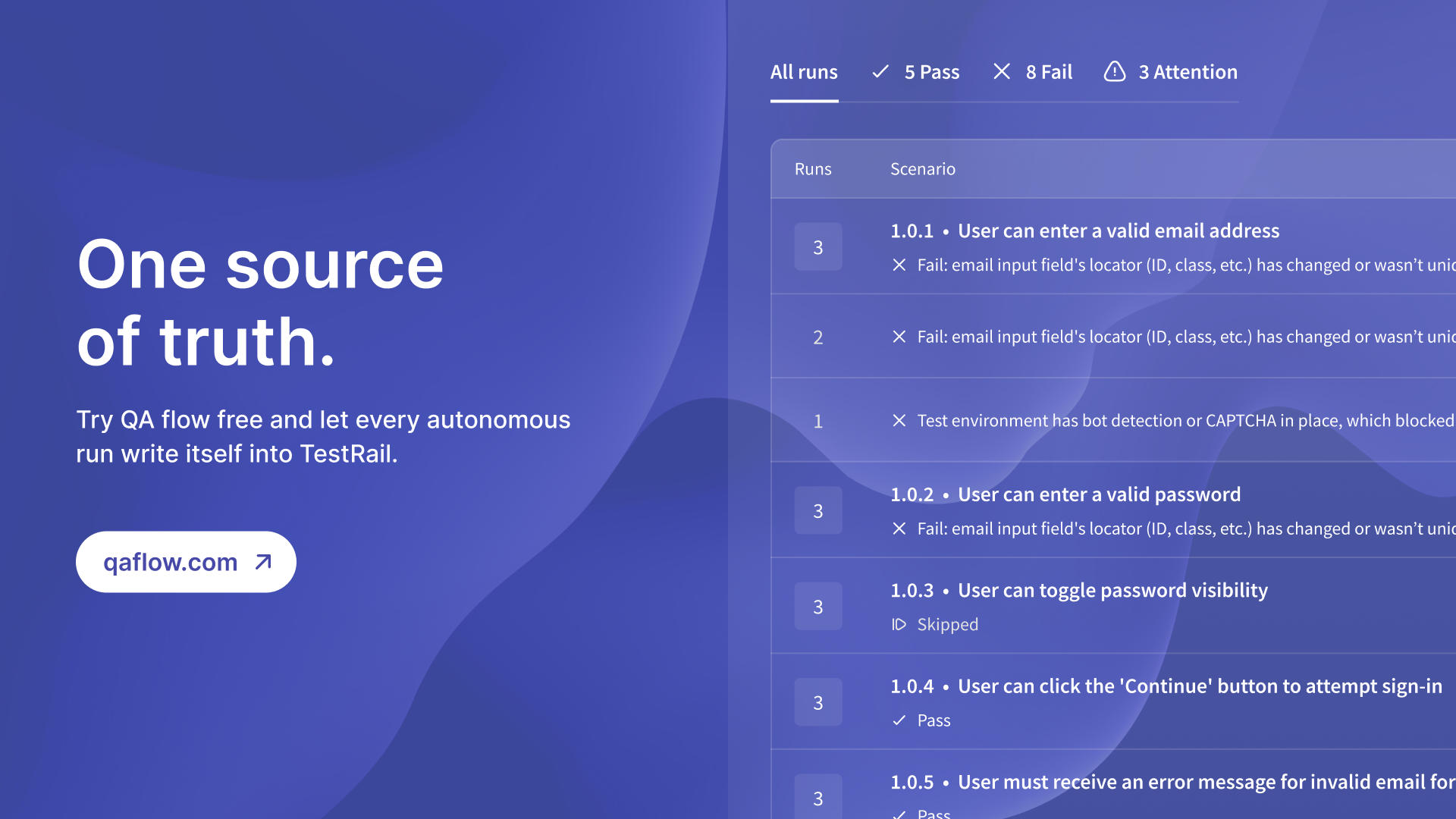
Maintaining a single source of truth shouldn't slow you down. Syncing autonomous agents with legacy management gives you the speed of AI and the reliability of a traditional audit trail. You can scale a Series C company on a unified foundation instead of relying on Series A manual processes. Start building your unified quality record today by exploring how QA flow integrates with your existing stack.
.png)