.svg)
.svg)
Automated testing vs autonomous testing: what's actually different

Most AI testing tools automate execution. Autonomous platforms automate test generation.
Most 'AI-powered testing' tools are just Selenium with smarter script generation. They still require humans to define what to test. True autonomous testing doesn't.
The market confusion
Engineering leaders see many vendors claiming "AI-powered testing" and "autonomous QA." Most are just automated test writing with improved code generation. This confusion matters because it masks a fundamental architectural difference with real scaling implications.
The main question: what's the real difference between automated test writing and autonomous testing, and why does it determine whether your QA team can scale with engineering? According to the Forrester Wave: Autonomous Testing Platforms, Q4 2025, autonomous testing platforms are no longer futuristic — they are now a must for organizations that want fast, high-quality software. Yet most teams still don't understand what makes a platform truly autonomous.
The bottleneck nobody talks about
Despite wide use of automation, 82% of teams still do manual testing each day, and only 45% automate regression tests, according to the Katalon State of Software Quality Report 2025.
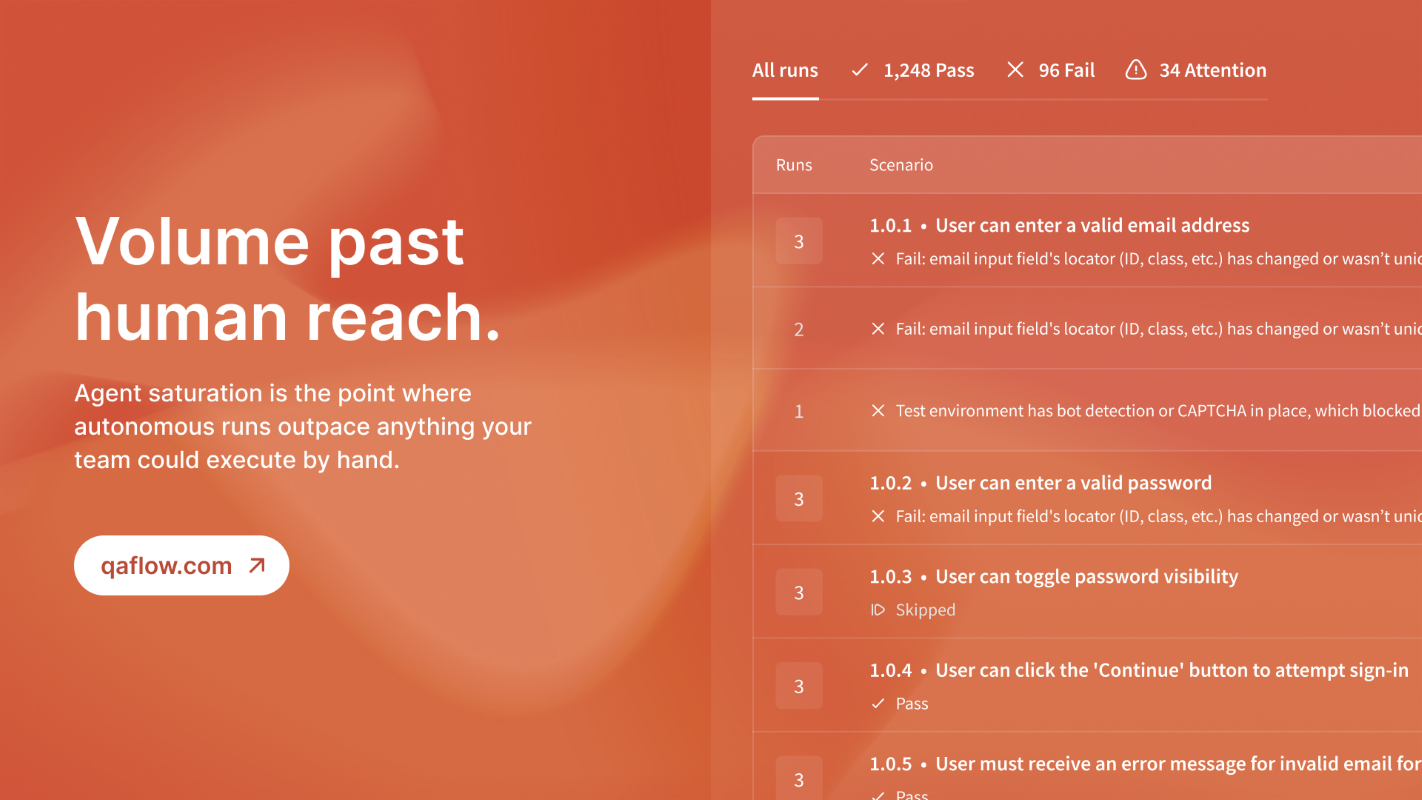
Why? Traditional test automation tools like Selenium, Cypress, and Playwright may use AI plugins, but people still need to define test cases and write scripts. They automate execution, not test generation. The same report lists insufficient time for thorough testing (55%) and heavy workloads (44%) as the top QA obstacles.
You can't scale QA proportionally by hiring if humans still define every test case. That's the bottleneck.
What automated testing actually automates
Automated testing tools execute human-defined test cases faster. Here's what that looks like:
- A QA engineer writes a test case: "User clicks login button, enters credentials, sees dashboard"
- AI plugins make script generation faster but don't change what gets tested
- An automation framework (Selenium, Cypress) executes that test case repeatedly
The human still defines what to test, when to test it, and what constitutes a pass or fail. The automation only handles execution speed and repeatability.
What autonomous testing actually automates
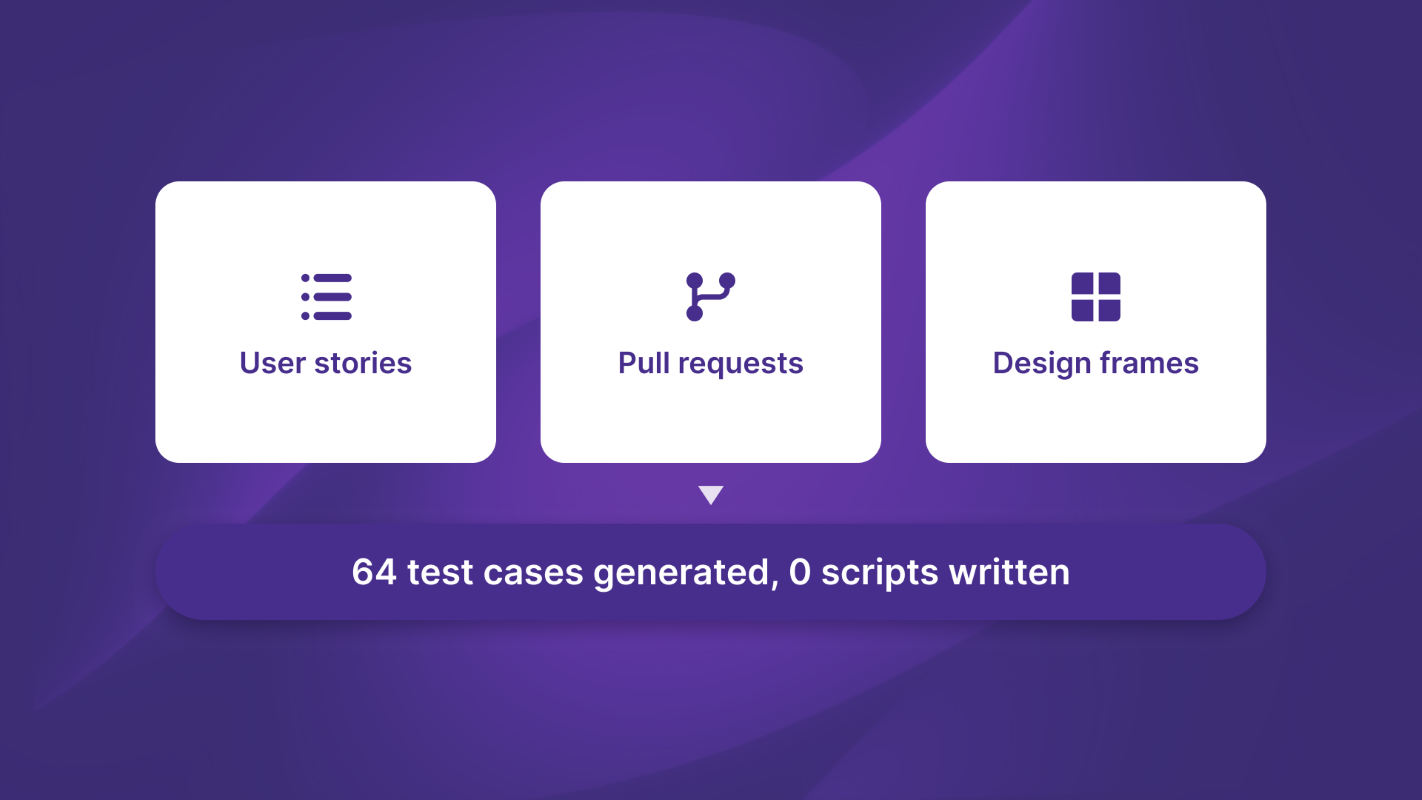
Autonomous testing platforms generate test cases from intent without human intervention in test case definition. Instead of humans writing "test the login flow," the platform reads Figma designs, user stories, and GitHub commits to understand what it should test.
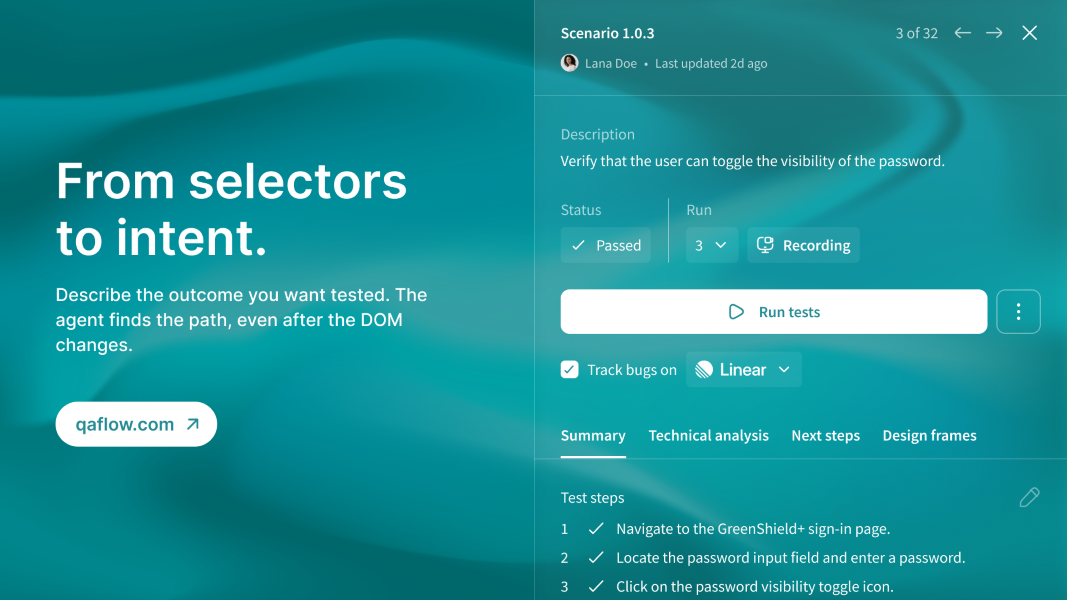
Tools like QA flow use autonomous agents that test behavior from design specs rather than brittle CSS selectors. When code refactors happen, tests remain valid because they're anchored to user intent, not DOM structure.
The architectural difference: autonomous platforms eliminate the human requirement in test case definition. QA engineers focus on exploratory testing and UX validation that requires human judgment, while agents handle regression coverage automatically.
The takeaway
Automated test writing automates execution of human-defined test cases. Autonomous testing automates the generation of test cases from intent. This architectural difference determines scalability.
You break the QA bottleneck by eliminating the human requirement in test case definition. That's what makes testing truly autonomous. Try the qaflow.com/audit tool to see autonomous testing analyze your site instantly.