.svg)
.svg)
Why most teams think they've automated QA (but haven't)

(1).png)
Most engineering leaders think they've automated QA when they generate Selenium scripts with AI. They haven't automated anything that matters.
Script generation tools, even AI-powered ones, still require humans to define what to test, when to test it, and how to report results. This creates a QA bottleneck disguised as automation. The real unlock is coordinating autonomous agents across your tools to remove human decisions from regression testing.
The problem With AI test generation
Here's the fundamental issue. Sixty-eight percent of teams now use AI testing tools for key testing tasks. This is according to Talent500's 2025 QA Testing Trends Survey. But most are just writing Selenium scripts faster. That's not autonomy, that's accelerated automation.
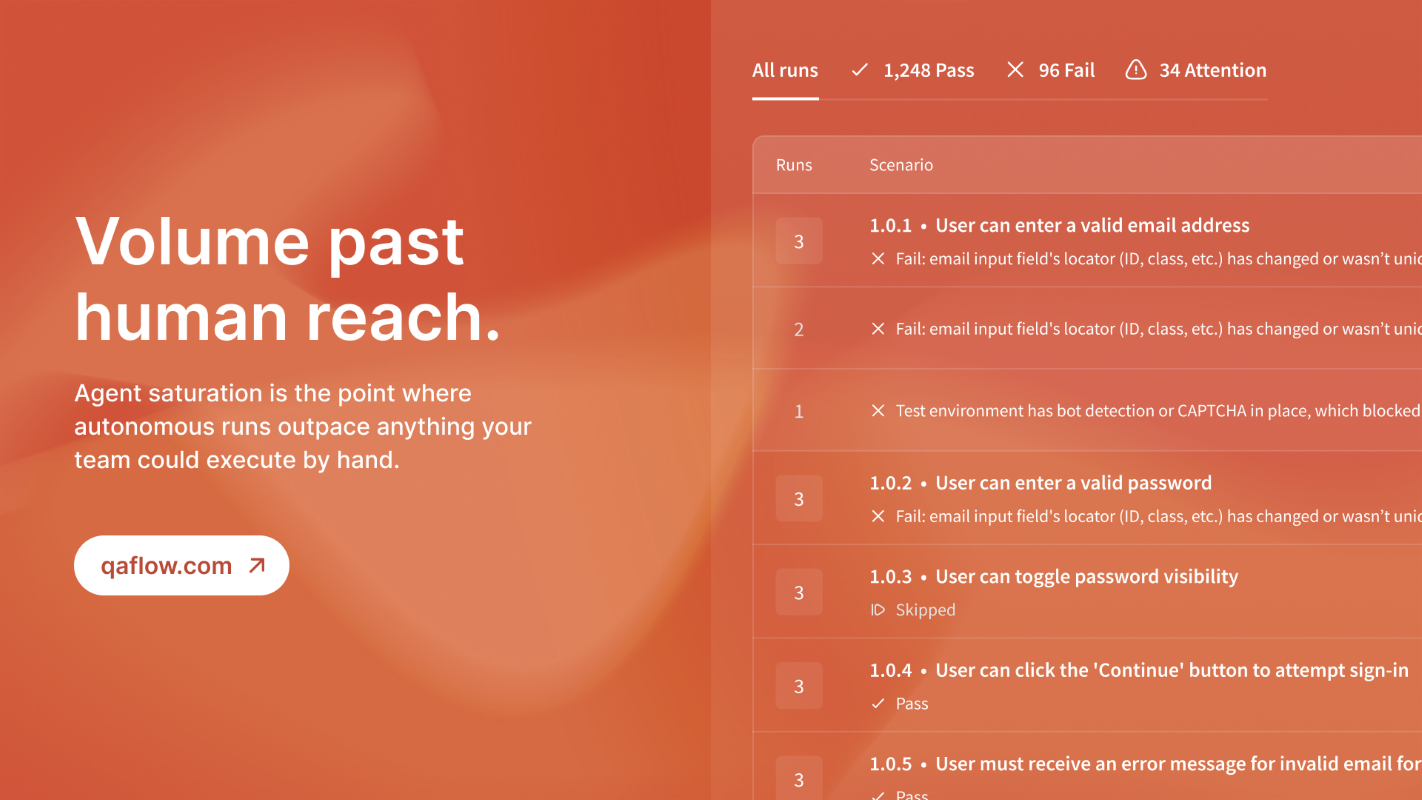
The bottleneck isn't test execution speed. It's the time spent creating test cases, deciding when to run them, and translating failures into actionable bug reports. Regression workflows alone consume 40-50% of QA team resources on repetitive low-value work. Script generation doesn't fix that because humans still make every decision.
What autonomous QA testing actually means
True autonomous QA testing requires multi-tool orchestration across three layers: specification ingestion, intelligent test execution, and production-ready reporting. Each layer eliminates a manual decision point.
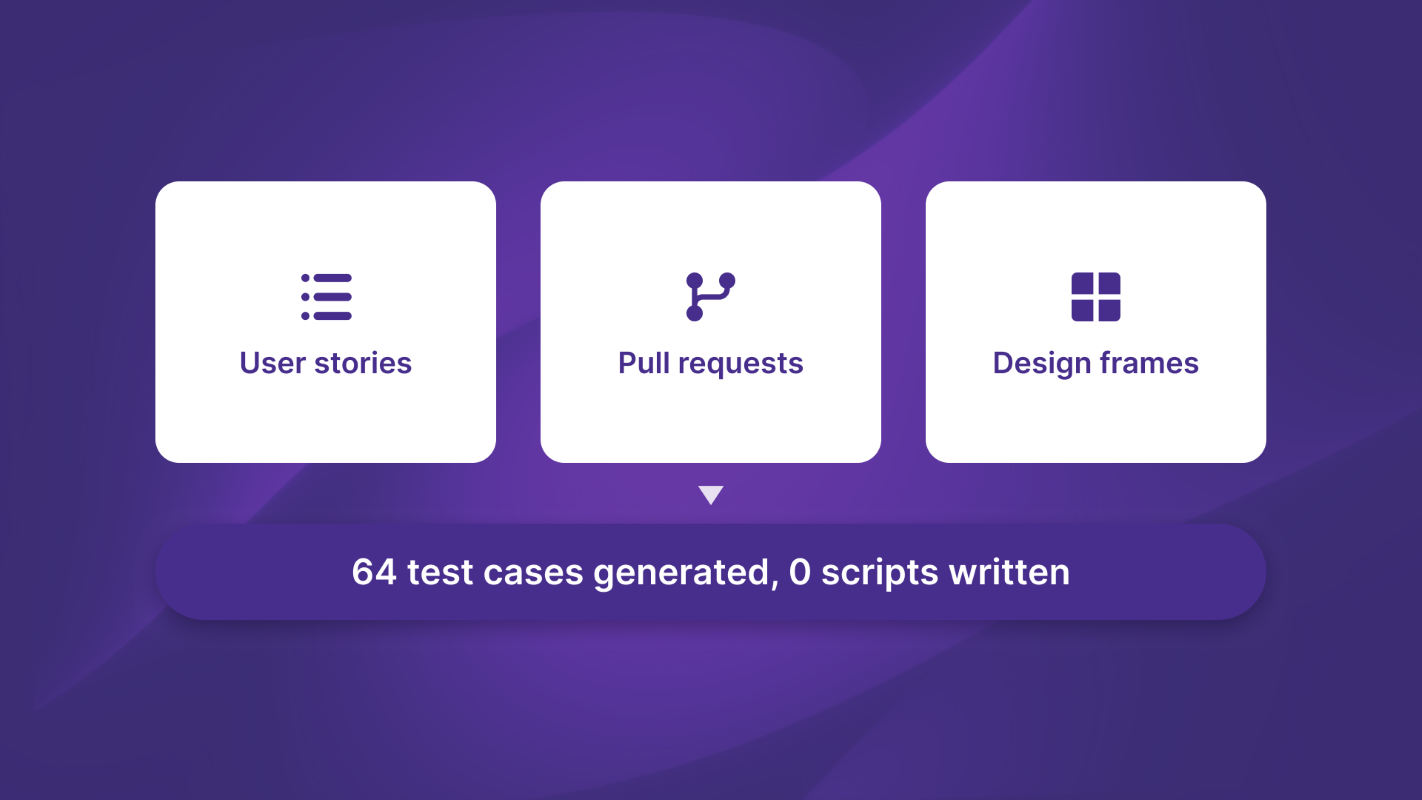
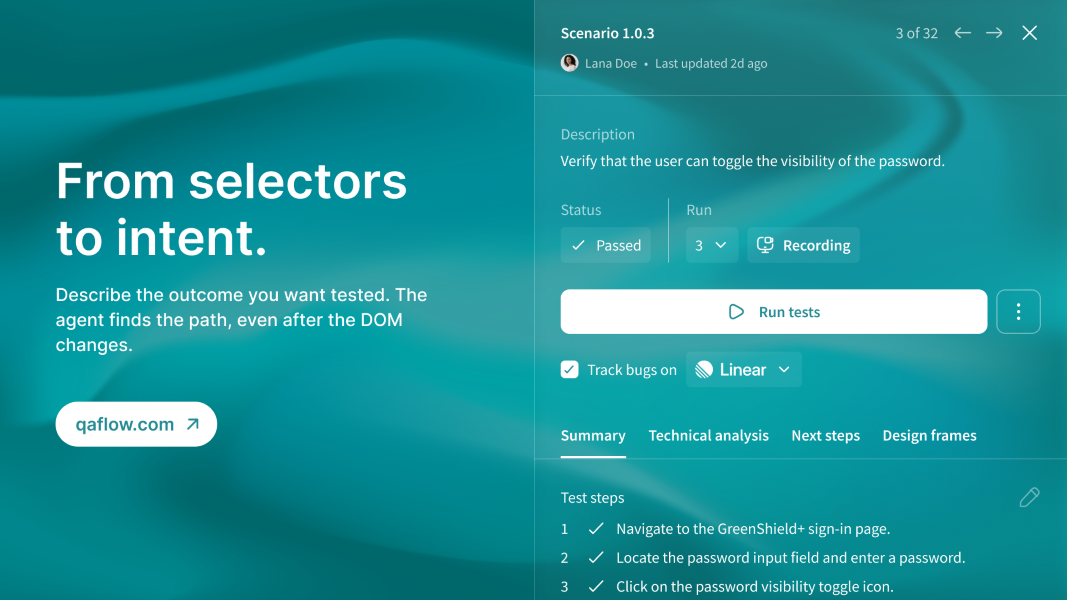
First, the system must read design specifications from Figma or user stories to understand what correct behavior looks like. No human defines test cases. Second, it monitors GitHub commits to detect when changes require regression testing. No human decides when to run tests. Third, it posts production-ready tickets to Jira or Linear with network logs, broken endpoints, and severity classification. No QA-developer communication cycles.
This is what QA flow was built to do. It works across your toolchain to support end-to-end autonomy. It can read specs. It can report bugs and include network diagnostics.
The architecture that enables autonomy
Autonomous testing isn't a single tool, it's an architecture that coordinates multiple agents. One agent reads Figma designs and converts visual specifications into test scenarios. Another monitors your GitHub repository for commits that trigger regression suites. A third analyzes test failures and generates tickets with network logs, status codes, and request payloads.
Production-ready bug tickets eliminate the communication overhead that slows development velocity. When developers get tickets with broken endpoints and full diagnostic data, they can reproduce and fix issues quickly. That's the difference between automation and autonomy.
Why this matters now
Sixty percent of teams are automating regression tests to free manual testers for exploratory work, per the Talent500 survey. But script generation doesn't accomplish that goal because someone still needs to maintain test suites and triage failures.
Autonomous QA workflow integration eliminates those tasks entirely. Your QA engineers stop writing regression tests and start doing high-value exploratory testing. Your developers stop triaging vague bug reports and start fixing issues faster.
The competitive implication
Automating test execution is table stakes in 2026. The competitive advantage comes from autonomous orchestration that eliminates human decision points across your entire QA workflow.
Audit your current AI testing tools against this autonomy criteria. Do they read specifications without human input? Do they decide when to run tests based on code changes? Do they generate production-ready tickets with network diagnostics? If the answer is no to any of these, you're solving the wrong problem.
Teams that architect for true autonomy will redeploy QA engineers to exploratory work. Teams stuck on script generation will continue scaling QA headcount linearly with engineering team growth.