.svg)
.svg)
How to architect autonomous testing CI/CD integration without breaking developer velocity

.png)
Most CI/CD pipelines treat QA as an afterthought. Tests run after deployment, bugs surface in production, and QA teams scramble to write regression tests for code that's already shipped. By then, it's too late.
51.8% of teams have adopted DevOps practices, pushing code multiple times daily. But QA workflows haven't evolved to match that velocity. The conventional approach creates a binary choice.
Either hire QA engineers as dev teams grow. This is expensive, takes three months to onboard, and costs $80,000 to $120,000 per year.
Or accept longer release cycles. This creates competitive risk in fast-moving markets.
Traditional test automation requires humans to write test cases and uses brittle CSS selectors that break on refactors. Maintenance debt scales linearly with codebase size. The real problem isn't test execution speed. It's that humans still define what to test.
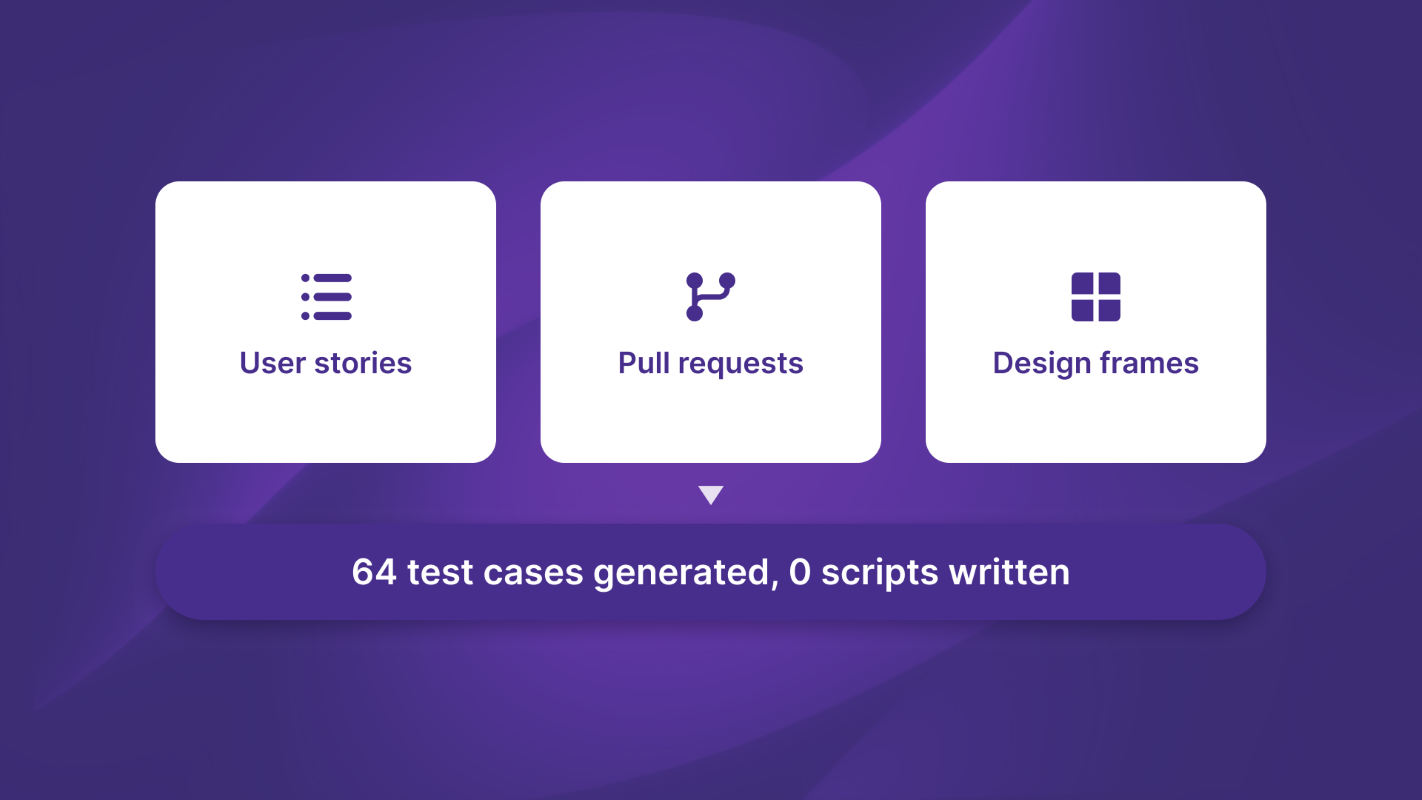
Autonomous testing CI/CD integration changes the architecture entirely. Instead of automating test execution, it automates test case definition, execution, and bug reporting. The system reads design specs in Figma and commit messages in GitHub to know what to test. Then it runs those tests automatically.
The architectural shift: from automated to autonomous
72.3% of teams are exploring AI-driven testing workflows, but most implementations still require humans to define test cases. Tools generate Selenium scripts faster, but someone still writes the test plan. That's automated execution, not autonomous testing.
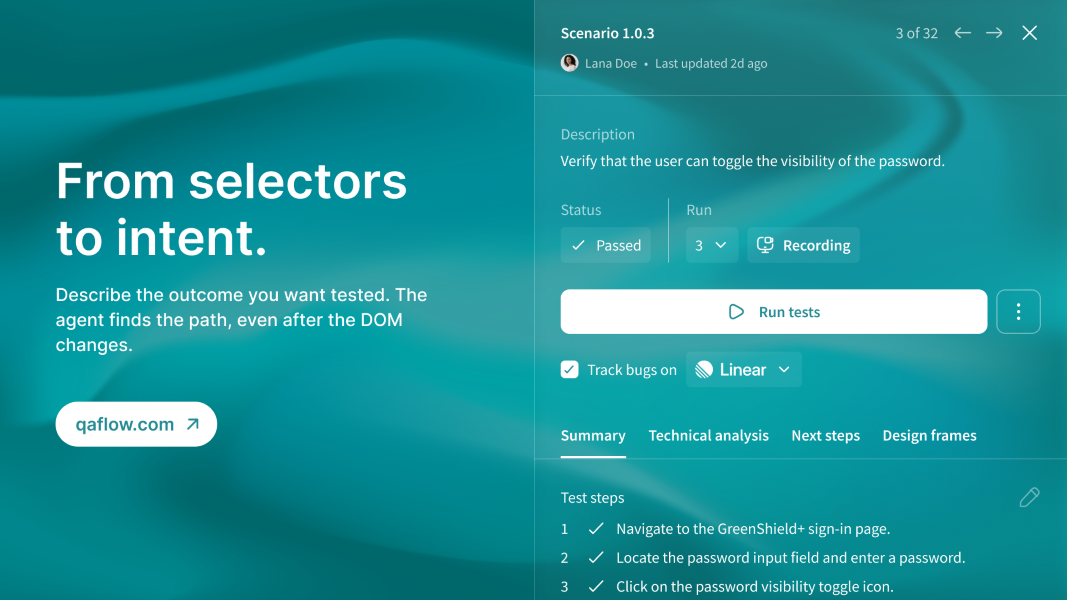
Intent-based testing validates behavior from design specs rather than implementation details. Traditional automation tests whether button#submit-btn exists. Autonomous testing tests whether the login flow works as designed, surviving code refactors that break CSS selector-based tests.
The architectural difference matters because refactors happen constantly in modern CI/CD environments. Every implementation change breaks brittle selectors, creating maintenance debt that consumes QA capacity. Intent-based testing reads Figma specs to learn the intended behavior. Then it checks that behavior, no matter how developers build it.
CI/CD integration architecture that scales
The integration pattern has three critical components. First, trigger on design commits using Figma webhooks and GitHub commit hooks. Tests generate automatically when designs change or code ships, not after deployment when it's too late.
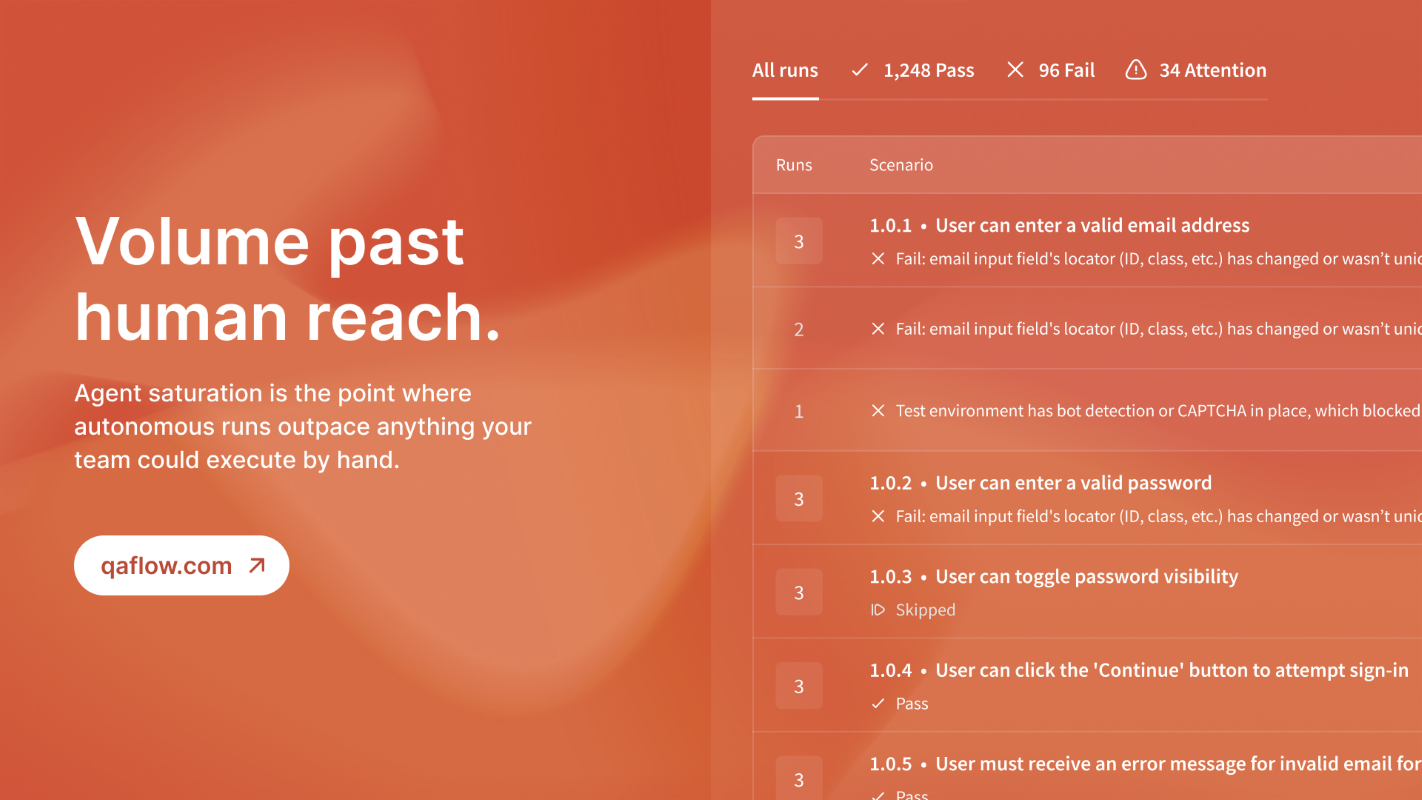
Second, execute in parallel on every push. Sequential testing creates bottlenecks that slow CI/CD velocity. Parallel execution maintains sub-3-day QA cycles even as test coverage expands. The system scales test capacity independently of QA headcount.
Third, auto-create comprehensive bug tickets posted directly to Jira or Linear. This matters more than most teams realize. Developers spend 67% more time debugging AI-generated code, making detailed bug reports critical. Network logs, status codes, broken endpoints, and environment context reduce back-and-forth between QA and developers.
Tools like QA flow use this architecture — reading design specs, generating test cases, posting bugs automatically with steps to reproduce. The qaflow.com/audit tool extends the same approach to website audits, detecting SEO issues, broken links, and performance bottlenecks without manual test definition.
Breaking the scaling constraint
Engineering teams scaling from 50 to 500 engineers face a mathematical constraint. Manual regression testing requires proportional QA hiring, but QA engineers take 3+ months to onboard. The trade-off seems binary: hire proportionally or slow releases.
Autonomous CI/CD testing breaks this constraint. On-demand regression coverage runs without proportional hiring. QA cycle time drops from 2 weeks to 3 days. QA engineers redeploy from repetitive regression work to high-value exploratory testing that finds critical edge cases.
The compounding advantage
Integrating autonomous testing into CI/CD isn't about replacing QA engineers. It's about breaking the scaling constraint that forces the choice between hiring proportionally or slowing releases. The pattern is clear: trigger on design commits, automatically generate tests, run in parallel on each push, and auto-create detailed bug tickets.
The teams that architect autonomous testing into CI/CD now will have a compounding advantage. Faster releases, better quality, and QA teams focused on critical edge cases instead of clicking through login flows for the 847th time.