.svg)
.svg)
Why billing bugs are your silent churn engine

.png)
Recently, I analyzed a high-growth DTC brand that noticed their churn was spiking despite strong sentiment. It wasn't because customers were unhappy. It was because their code was breaking the checkout flow in ways they couldn't see. For Series B and C startups, this is not a marketing failure. It is a technical leak that manual QA cannot fix. I call this the "billing bug tax." This is a silent revenue drain where customers want to pay, but your stack won't let them.
Involuntary churn as a technical failure in ecommerce testing
I’ve found that most leadership teams treat churn as a sentiment problem. They offer discounts or send win-back emails, but they ignore the underlying plumbing. Stripe data shows that involuntary churn represents a massive portion of total subscriber loss. This includes failed payments due to card expiry or network issues. When your ecommerce testing plan ignores the handoff between your site and the gateway, you lose sales.
I noticed a pattern where brands ignore the structural liability of manual QA in an AI-accelerated environment. This often leads to agencies failing the final site during handoff. Most teams lack the infrastructure to catch these edge cases before they affect the bottom line.
The complexity of the handoff
Payment gateway handoffs are high-stakes edge cases. A small update to a loyalty app or a change to a DOM selector can break data flow between your cart and the processor. Manual regression testing often misses these because they only occur under specific conditions. This might include a localized currency shift or a multi-unit subscription bundle. By the time a human tester notices the drop in successful transactions, you've already lost thousands in LTV.
Indicators of technical churn
- Sudden drops in successful transactions after a site update
- Discrepancies between cart clicks and payment gateway attempts
- High customer support tickets related to "Complete Purchase" button errors
- Failed renewals for specific localized currencies
The compounded impact on B2C growth and seo migration
The math: Average B2C churn ranges from 5% to 7% according to Recurly. Even a 1% reduction in technical failures significantly improves LTV/CAC ratios. If you are spending millions on customer acquisition, a broken checkout flow is an ROI collapse. You are filling a leaky bucket. These risks increase during a site migration seo or a broader seo migration. Technical redirects often conflict with checkout scripts.
I’ve seen this firsthand when analyzing private label beauty startup costs. High-margin products lose their competitive edge the moment a mobile checkout fails. If you are managing a high-growth brand, your technical hire failures shouldn't be the only cost that surprises you. The hidden cost of billing bugs is often much higher.
What to ask your engineering team
- How many failed transactions last month were due to technical timeouts?
- Do our manual QA cycles cover multi-currency subscription renewals?
- Are we testing the actual behavior of the payment gateway in production-like environments?
- Can we detect a DOM conflict before it affects the "Complete Purchase" button?
- Are we using a Shopify pre-launch QA checklist to automate intent-based testing?
- Is our workflow friction causing LinkedIn drafts and other high-value assets to stall?
Reclaiming your revenue through ecommerce software testing services
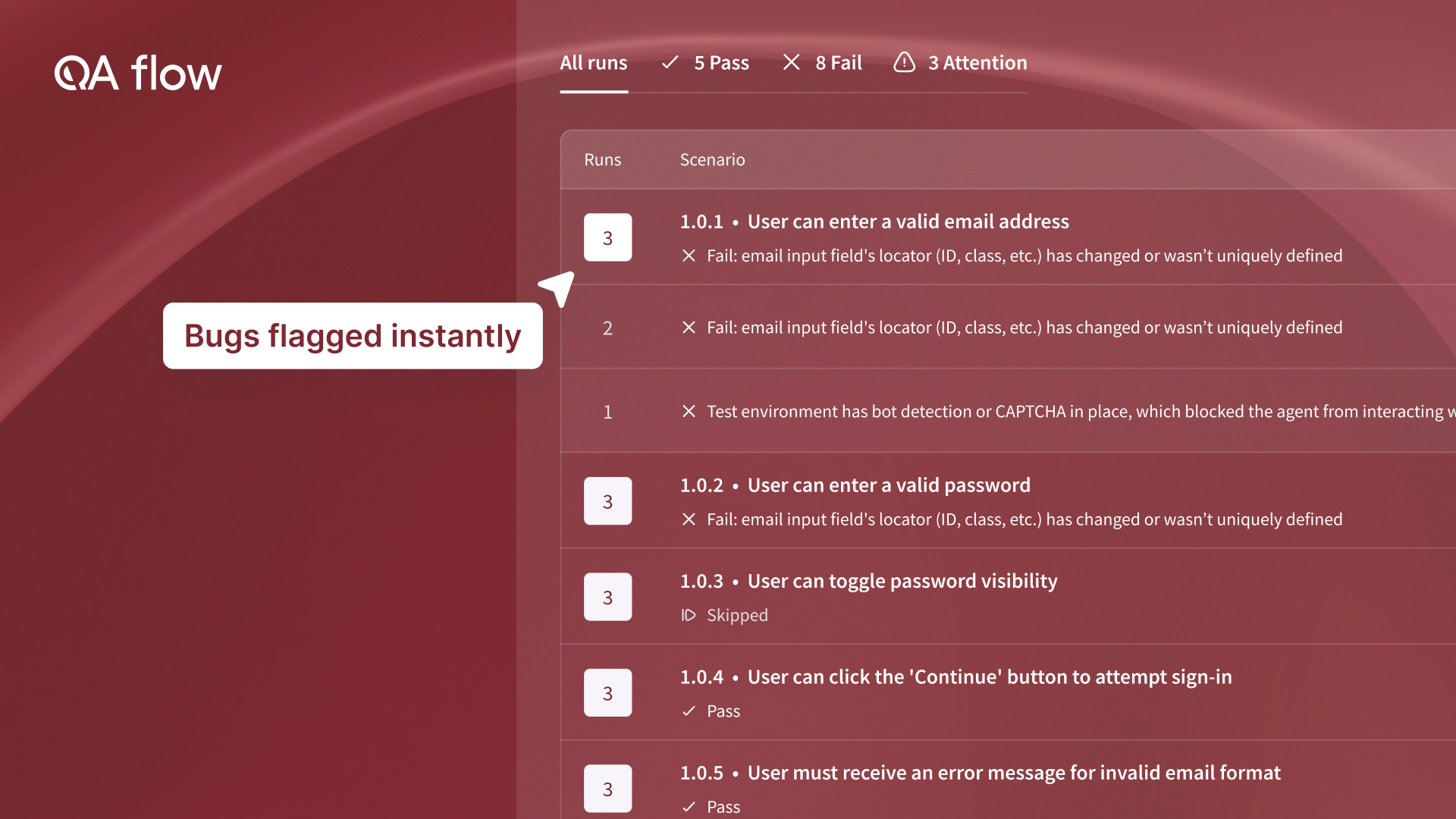
I noticed a distinction between brands that scale and those that stall. The winners treat checkout integrity as a product feature. Traditional ecommerce software testing services are too slow for weekly release cycles. You need autonomous agents that understand intent. QA flow provides this by protecting your profit margins. It stops the 18% revenue loss typical of unoptimized stacks.
This gap between strategic promise and tactical execution capacity is why fractional marketing engagements fail early on. Without a solid technical foundation, marketing spend is wasted. You must prevent invoice disputes by ensuring the billing infrastructure is transparent and functional from the first click.
Summary of ecommerce qa testing essentials
Economic reality: you can't market your way out of a technical leak. One approach optimizes the bottleneck;the other removes it with QA flow. Keep these takeaways in mind:
- Involuntary churn is often a technical bug, not a customer choice
- Manual QA cannot reliably catch gateway handoff edge cases
- A 1% reduction in billing failures drastically improves unit economics
- Use ecommerce qa testing and an ecommerce testing strategy to automate intent-based validation
Stop letting technical leaks drain your revenue and start protecting your checkout flow. Start free with QA flow today.