.svg)
.svg)
Why your test automation coverage plateaus at 25%

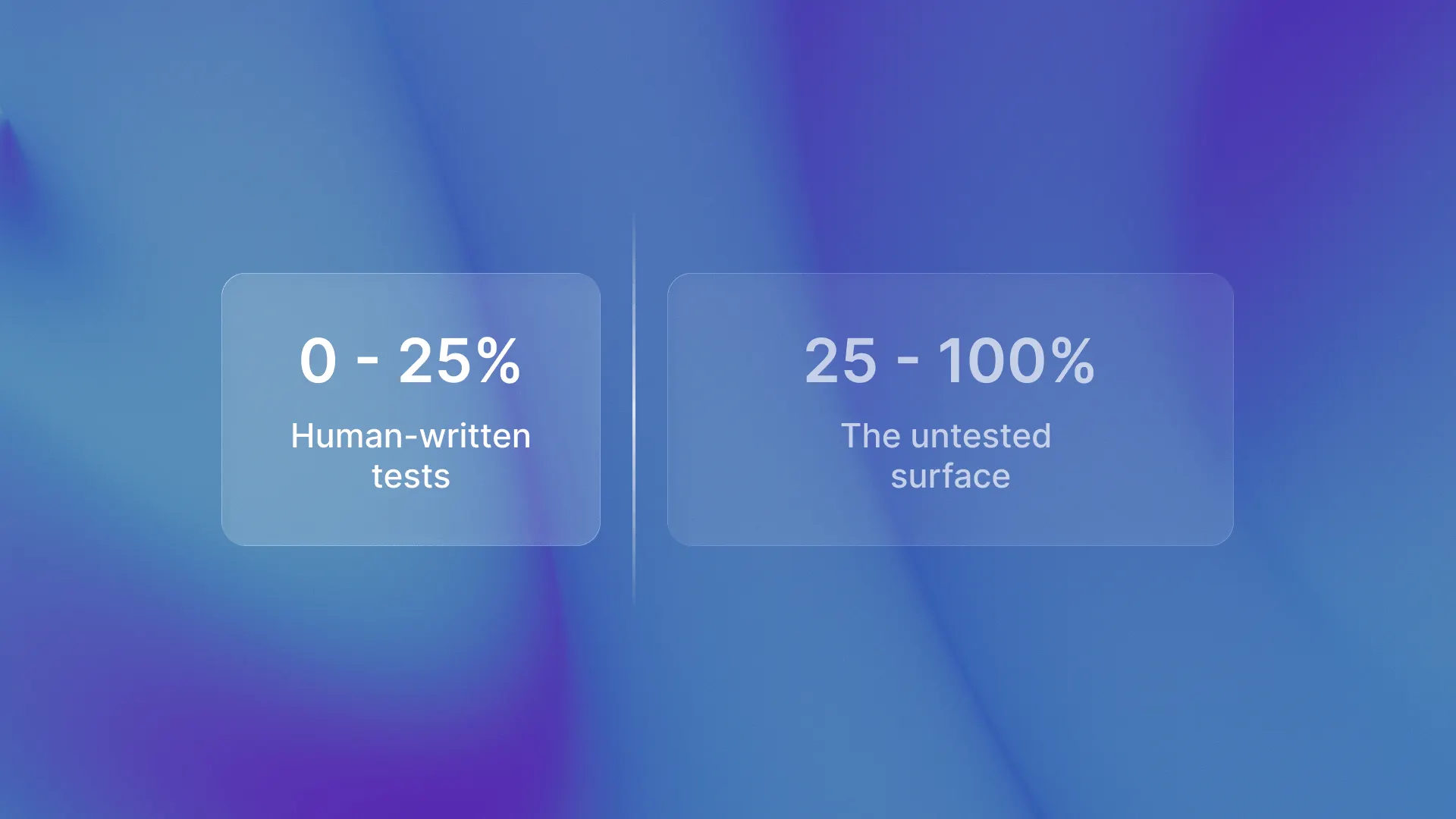
You've hired automation engineers. You've invested in Selenium, Cypress, or Playwright. You've built CI/CD pipelines. And yet your test automation coverage sits stubbornly at 25%. You're not alone, and it's not your team's fault.
Forrester's Q4 2025 Wave on autonomous testing platforms revealed a key finding. Most organizations level off at 25% automation coverage with continuous automation platforms. This happens no matter the tools used or the money invested. This isn't an execution problem. It's a structural limitation baked into how traditional automation works. The main issue is a bottleneck in test case definitions. Continuous automation needs people to define each test case. This creates a linear scaling limit. It makes high coverage too costly.
The scaling problem
Traditional automation requires humans to write every test case. An automation engineer writes test scripts. CI/CD runs those scripts faster than manual testing. But here's the problem: test coverage grows proportionally to QA engineering headcount. This creates a fundamental constraint where 100% coverage becomes economically impossible.
Think about it this way. If one QA engineer achieves 5% coverage, you need 20 engineers for 100% coverage. The math doesn't work at scale. By 2025-2026, 80% of software teams will use AI-driven testing. This is according to the ThinkSys QA Trends Report 2026. It shows many teams know human-written test case models cannot scale.
Why 25% is the natural ceiling
The 25% plateau isn't arbitrary. It's where the cost of additional QA headcount exceeds the value of incremental coverage for most organizations. You face a two-part choice: hire QA engineers as you grow, or accept a 25% cap.
Hiring is costly, and onboarding takes time.If you do not hire, expect longer release cycles. Most companies choose the ceiling.
This forces a tradeoff between release velocity and quality. Teams test critical paths and accept bug escape rates on everything else. The TestGuild Automation Testing Trends 2025 report shows that 72.3% of teams tried or adopted AI-driven testing by 2024.
By 2024, these teams had explored or started using AI-driven testing. This is one of the fastest adoption curves in TestGuild survey history. Engineering leaders recognize the linear scaling model as unsustainable for modern development velocity requirements.
How autonomous testing breaks the ceiling
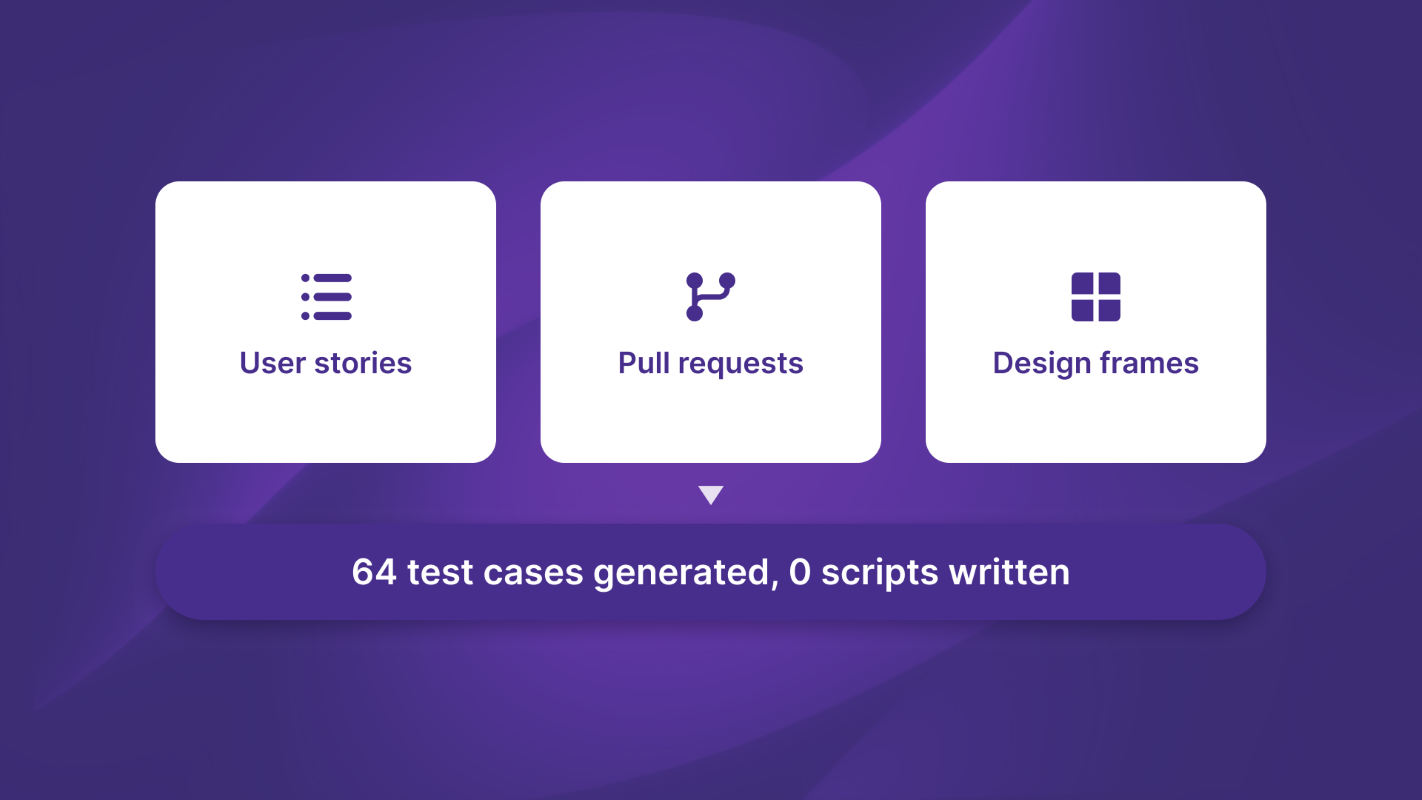
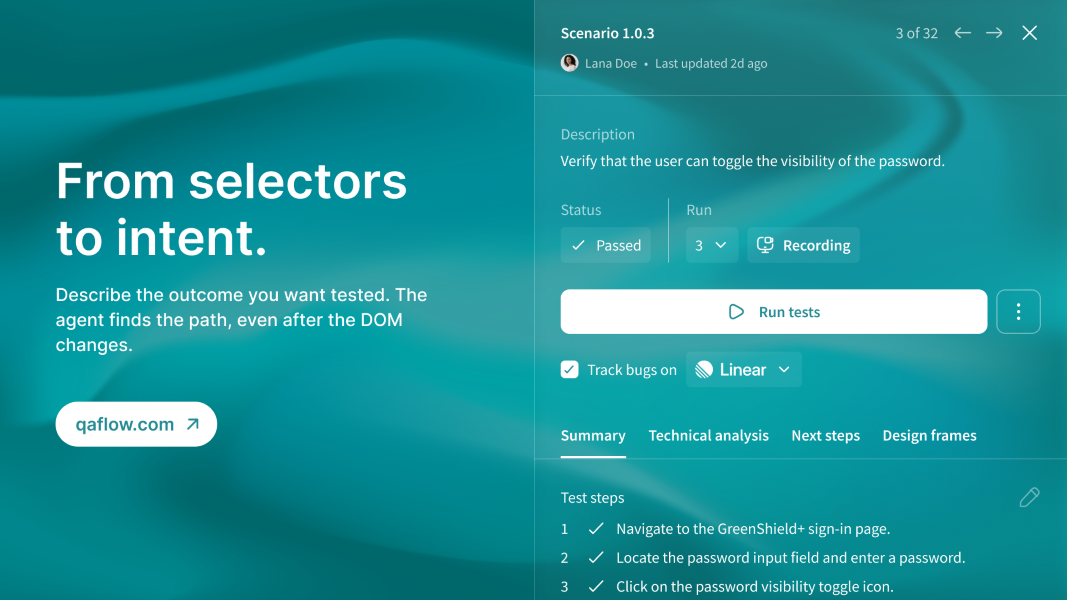
Autonomous testing platforms eliminate the test case definition bottleneck entirely. Instead of needing humans to write test cases, these platforms generate tests from intent.
They use Figma specs, GitHub commits, and user stories. This shifts from linear to exponential scaling. One engineer can now oversee test generation across the entire application.
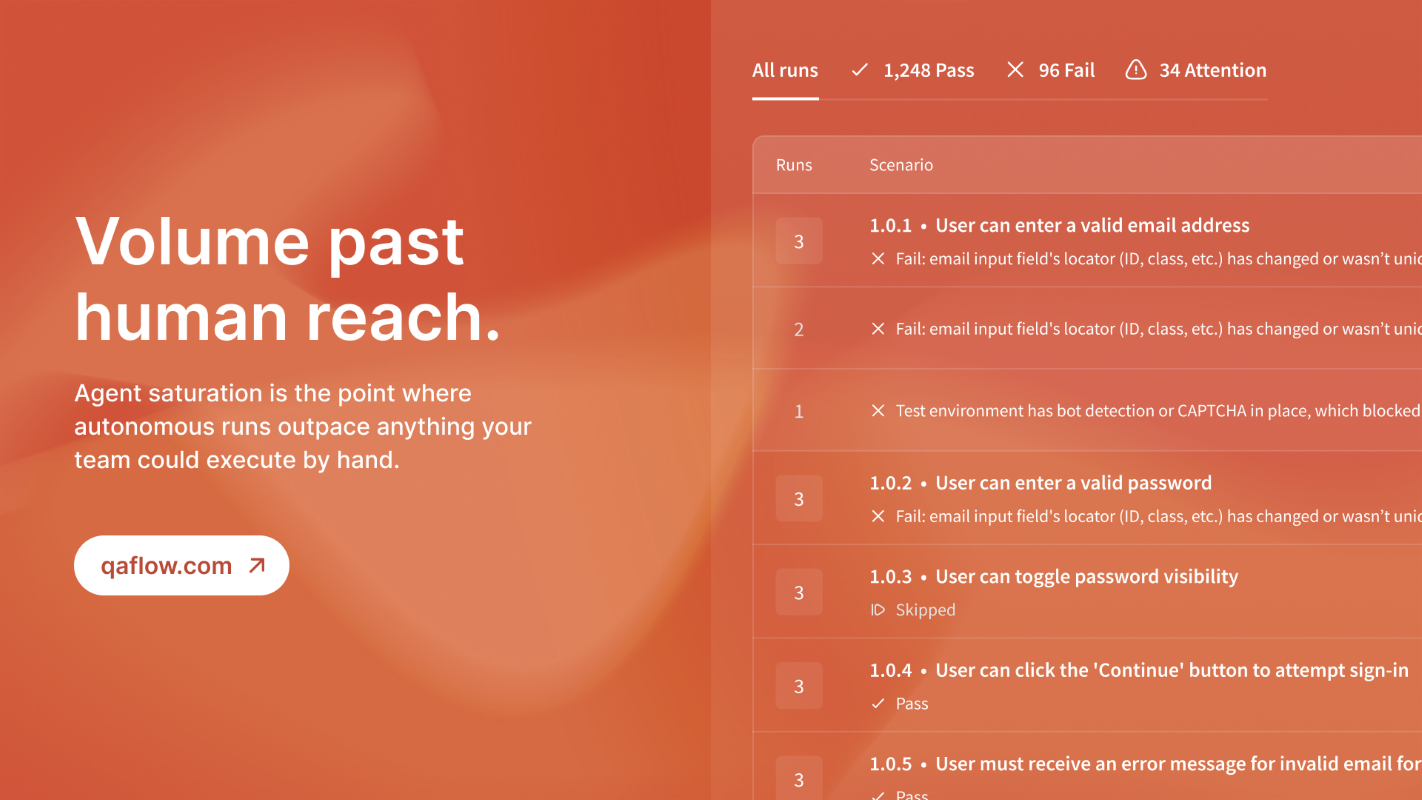
Tools like QA flow use autonomous agents that analyze design files and automatically create comprehensive test suites. The platform generates tests, runs them continuously, and creates bug tickets in Jira or Linear without human intervention. This architectural shift is what enables teams to break through the 25% ceiling without proportional headcount increases.
The competitive disadvantage of staying put
As 80% of teams adopt AI-driven testing by 2026, staying on continuous automation platforms becomes a competitive liability. The coverage gap translates directly to bug escape rates, slower releases, and lost confidence. Organizations must choose between accepting the 25% ceiling or adopting autonomous platforms that eliminate the bottleneck entirely.
The 25% plateau isn't a temporary barrier. It's the natural ceiling of human-written test case models. If you're evaluating next-generation testing approaches, the qaflow.com/audit tool provides instant analysis of your current testing gaps and opportunities for autonomous coverage expansion.